

Alapata Leadership Dispute Ends in Six-Month Extension Amid Protest

A leadership crisis involving the Alapata, or butchers’ association, in Ijebu-Igbo, Ogun State, has led to a three-day strike over a dispute concerning the tenure of the association’s chairman. Although the chairman’s four-year tenure has expired, he has insisted on staying in office for another six months, a position reportedly backed by the local government.

Speaking outside the meeting venue, a member of the association, Muftau Adaran, said the dispute also centred on the association’s operational arrangements. He alleged that the chairman had failed to adequately account for his activities and described his continued leadership as uncomfortable for members.

Adaran also alleged that the local government had previously stayed out of the affairs of the Alapata association but intervened in the current dispute by supporting the chairman’s proposed six-month extension. He said the strike had resulted in financial losses for the butchers and inconvenienced their customers, while members maintained that the outgoing chairman should hand over to a caretaker committee pending the conduct of a fresh election.

The dispute was later discussed at a meeting held at the Orimolusi Palace in Ijebu-Igbo. The meeting was attended by key stakeholders, including three former local government chairmen, the incumbent local government chairman, Senator Kaka, the Director of the Department of State Services, representatives of various towns and the Secretary to the Local Government, among others.

During the meeting, stakeholders established that the four-year tenure provision could not be regarded as fully binding because the association’s constitution had not been formally signed and stamped. This prompted the stakeholders to seek a compromise that would resolve the leadership dispute.

At the end of the meeting, stakeholders agreed that the incumbent Alapata chairman would remain in office for another six months, after which he would vacate the position. However, members of the association reportedly rejected the decision, leaving the meeting venue amid anger and loud protests.

The development means that despite the agreement reached by the stakeholders, the leadership crisis remains unresolved among members who opposed the six-month extension.
IBEDC Apologises Over Blackouts in Ogun, Oyo, Kwara

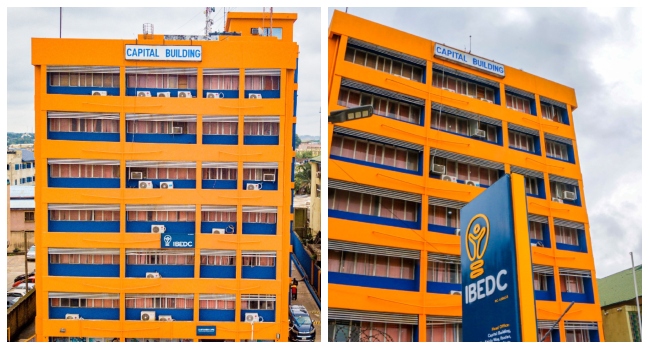
The Ibadan Electricity Distribution Company, IBEDC, has apologised to Band A customers in Ogun, Oyo and Kwara states after several feeders failed to provide the required daily electricity supply hours on Monday.

The company blamed the outages on technical faults, load shedding, forced outages and disconnections linked to unpaid bills, with some feeders recording no power supply.

One of the affected feeders was the Water Works, Ojere 33kV feeder serving Arakanga Water Scheme and Iberekodo in Abeokuta, which IBEDC said was disconnected over non-payment.

Other affected feeders included those serving Papalanto Train Station in Ogun and Moniya Train Station in Ibadan, while the Joju feeder supplying parts of Owode, Ajibode and Iya Ilogbo experienced a prolonged outage due to a breaker fault.

IBEDC said some other Band A feeders recorded between 12 and 19 hours of supply due to equipment faults and load shedding, but reaffirmed its commitment to meeting the required supply hours.

Tinubu: Nigeria Must Turn Economic Stability Into Jobs, Investment

President Bola Tinubu says his administration is now shifting its focus from achieving economic stability to using that stability to drive investment, increase production, create jobs and improve Nigerians’ living standards.

Tinubu made this known on Tuesday at the 19th Annual Banking and Finance Conference in Abuja, where he said the economic reforms introduced by his government were beginning to deliver positive results.

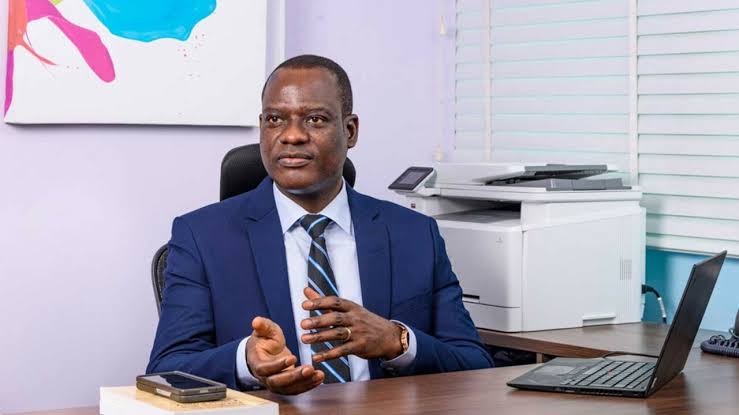
The President, who was represented by the Minister of Finance and Coordinating Minister of the Economy, Taiwo Oyedele, said the banking and financial sector would be vital to achieving the country’s economic transformation.

Tinubu said stability should serve as the foundation for achieving greater prosperity.

He said his administration had implemented difficult reforms in foreign exchange, taxation, public finances and fiscal management to correct structural problems that had built up over several decades.

He pointed to the economy’s 4.43 per cent growth in the second quarter of 2026 and an estimated 17 per cent increase in GDP in US dollar terms during the first half of the year as evidence of progress.

The President also maintained that Nigeria was still on course to reach a $1 trillion economy by 2030, while its purchasing-power GDP had exceeded $2.2 trillion.

He further cited rising external reserves, now above $54 billion, declining inflation, increased investor confidence and positive assessments from international rating agencies as signs of economic improvement.

Tinubu called on banks to move beyond traditional financial intermediation and play a bigger role in transforming the economy by providing more funding to businesses and productive sectors.

He identified economic growth, financial inclusion, technology, long-term financing and public trust as key priorities for creating a stronger and more resilient financial system.

The President also called for deeper development of Nigeria’s capital markets, pension, insurance and asset management industries to attract long-term funding for infrastructure, manufacturing, housing and energy.

He stressed the importance of public confidence in the financial system, saying strong consumer protection and effective regulation were necessary to sustain financial stability.

Uber Announces Exit From Nigeria

Uber has announced that it will discontinue its ride-hailing services in Nigeria following a review of its business operations in the country.

The ride-hailing company disclosed this in a message sent to drivers on Wednesday, stating that its services would officially end on September 2, 2026.

Uber informed its drivers that they would no longer receive requests from passengers through the Uber app once the shutdown takes effect.

The company described the decision as a difficult one and thanked its drivers for their support and contributions throughout its years of operation in Nigeria.

Uber also recognised the efforts of its drivers in providing transportation services and helping people move around Nigerian cities.

The company said it was proud of the impact its platform had made in Nigeria, noting that it served as a technology link between passengers and independent drivers.

However, Uber did not give specific reasons for its decision to discontinue its operations in the country.

The company said its Help Centre would remain available to drivers who have questions about the shutdown until September 24, 2026.

The decision marks a major change in Nigeria’s ride-hailing sector, with Uber joining other app-based transportation services operating in the country.

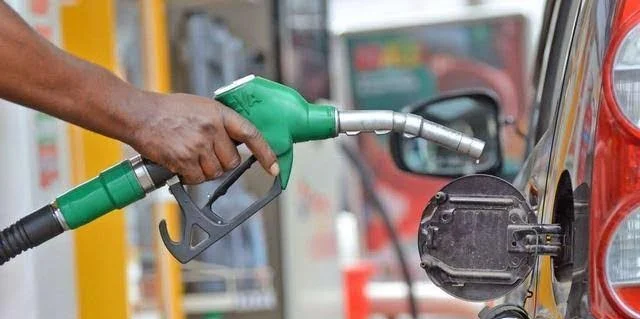
Dangote threatens to export petrol as imports rise

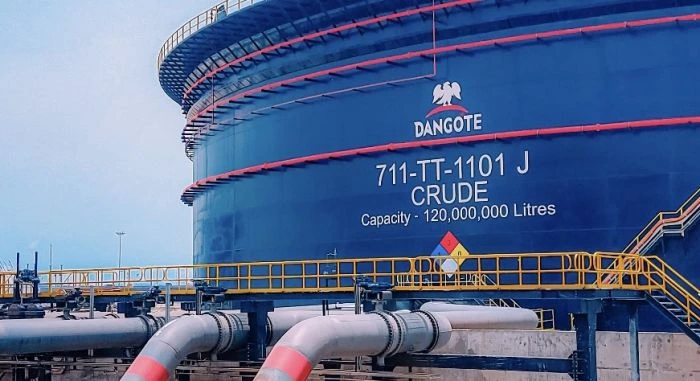
The Dangote Petroleum Refinery has warned that it may export excess petrol stocks as increasing imports complicate domestic demand forecasts and make inventory management more difficult.

The refinery said imported Premium Motor Spirit, commonly known as petrol, accounted for about 43 per cent of the fuel supplied to the Nigerian market in July, despite its ability to meet and surpass local demand.

It attributed the uncertainty to the continued issuance of petroleum product import licences, which it said was affecting demand forecasts and making it harder to determine the appropriate volume of petrol to keep in storage for the domestic market.

The refinery said it had maintained adequate stock levels and reserved petrol volumes to ensure uninterrupted supply to the Nigerian market since beginning operations, requiring substantial investments in storage facilities, logistics and working capital.

However, the company said the absence of clear information on the volume of imported petrol expected into the country was affecting its ability to efficiently plan production and manage inventory.

It explained that any petrol surplus that could not be immediately absorbed by the local market would have to be redirected to regional and international markets through exports.

The refinery said the rise in its export volumes should therefore not be viewed as an indication that it was unable to meet domestic demand, but rather as a consequence of excess stocks created by uncertainty surrounding the volume of imported petrol entering the country.

“However, the absence of transparency regarding the actual volume of imported products expected into the country makes effective production and inventory planning increasingly challenging. Maintaining large stock positions without clear visibility into import volumes imposes substantial carrying costs on the refinery and ultimately undermines efficient market operations,” it stated.

The company said exporting the excess petrol would help it avoid additional storage and financing expenses associated with maintaining large inventories.

It stressed that the development did not amount to a withdrawal from the Nigerian market, reaffirming its commitment to maintaining sufficient petrol supplies across the country.

FG Targets 8,000MW Power Generation, Transmission by 2027

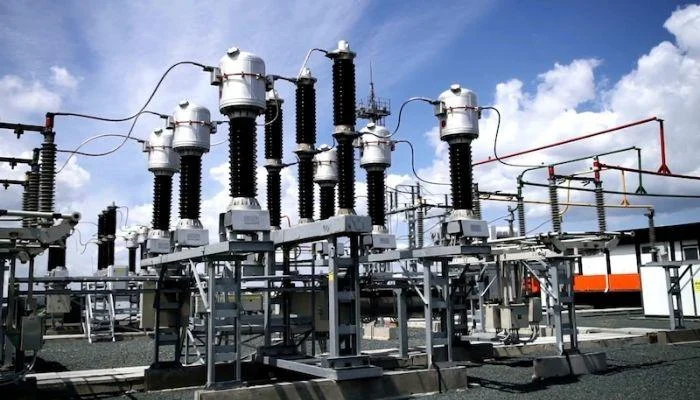
The Federal Government says it is aiming to achieve 8,000 megawatts of electricity generation and transmission by the end of 2027 as part of measures to boost power supply nationwide.

The Minister of Power, Joseph Tegbe, disclosed this on Wednesday in Abuja during the launch of the Renewable Energy Assets Management Company by the Rural Electrification Agency.

Tegbe said the government was targeting 6,500MW by the end of 2026, acknowledging that the country currently faces challenges in wheeling about 5,000MW of available electricity.

He expressed optimism that Nigerians would soon have access to round-the-clock electricity, describing the recent improvements in the power sector as the beginning of broader reforms aimed at transforming electricity supply.

The minister lamented that Nigeria had endured an embarrassing situation of inadequate electricity despite possessing significant power resources and infrastructure.

According to him, the newly established RAMCO is expected to adopt a new model for managing and sustaining renewable energy assets, with its mandate eventually expanding to cover the wider electricity grid.

Tegbe added that the government was developing a more flexible electricity system that would integrate grid power, embedded generation, interconnected and distributed renewable energy, energy storage and other emerging technologies.

Dollar exchanges at N1,346 official rate, N1,400 in parallel market

The Nigerian naira remained relatively stable against the United States dollar on Wednesday, although a noticeable difference persists between the official foreign exchange market and the parallel market.

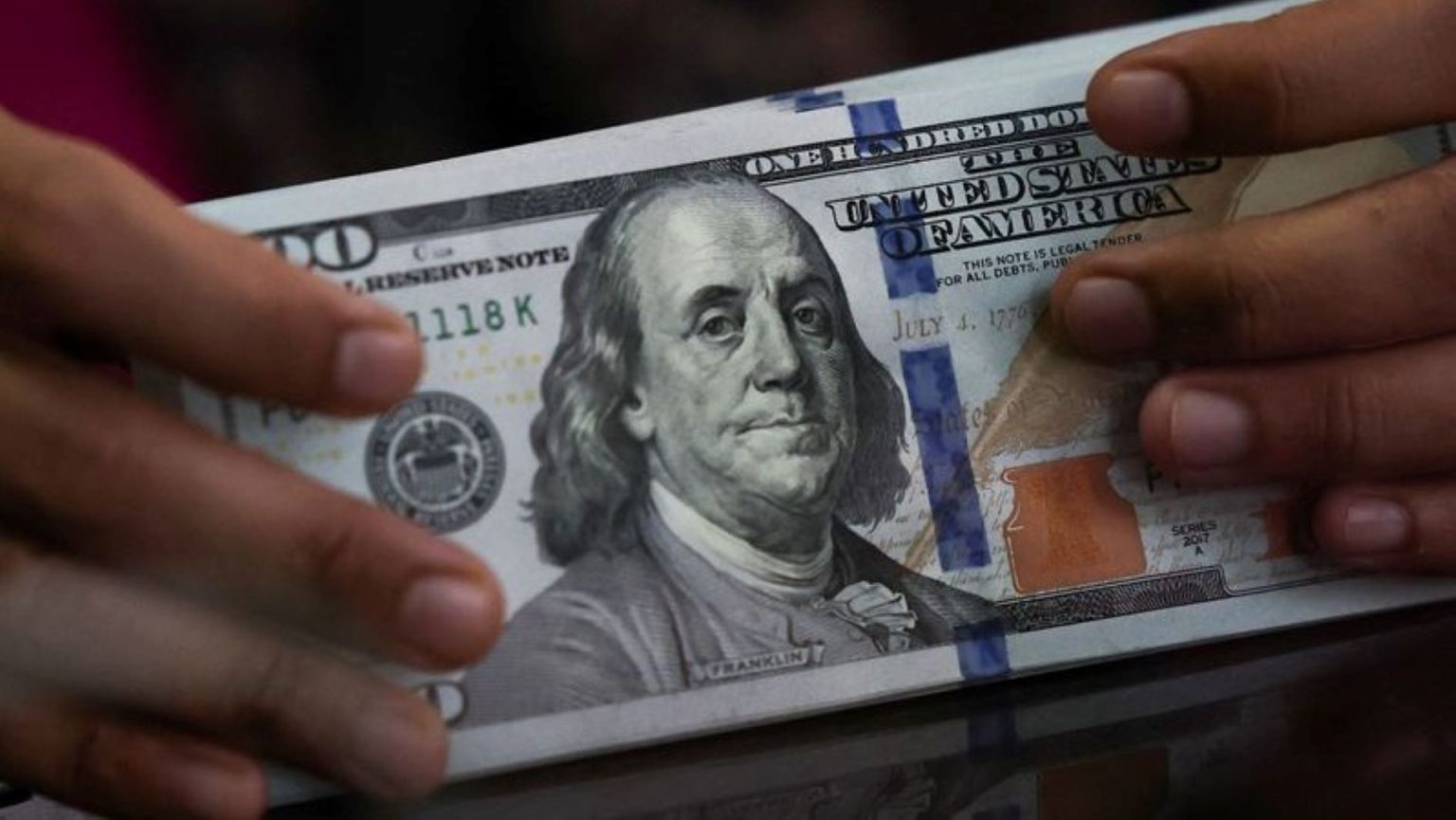
The latest available data from the Nigerian Foreign Exchange Market (NFEM) placed the dollar at approximately ₦1,346.34 on Wednesday, reflecting the current benchmark exchange rate.

According to the Central Bank of Nigeria (CBN), the NFEM rate is calculated using the volume-weighted average of transactions carried out in the market and represents the official exchange rate for the day.

Other confirmed figures from the official market showed the naira closing at about ₦1,346.90 to the dollar, keeping the currency within the ₦1,347/$ range.

Meanwhile, the dollar was trading at approximately ₦1,400 in the parallel market on Wednesday, according to Aboki Forex, which regularly monitors and publishes street-market exchange rates.

At the parallel-market rate of ₦1,400 to the dollar, $100 would be worth about ₦140,000, while $1,000 would exchange for approximately ₦1.4 million.

The gap between the NFEM rate of ₦1,346.34 and the parallel-market rate of ₦1,400 stands at roughly ₦53.66 per dollar.

The naira’s relative stability comes amid improved conditions in Nigeria’s foreign exchange market. The previous week, the currency was trading at around ₦1,345/$ in the official market, compared with approximately ₦1,410/$ on the streets, indicating a reduction in the disparity between both markets.

The CBN’s latest data indicate that NFEM rates are determined from actual transactions in the official market. In contrast, parallel-market rates can vary during the day based on dollar availability, demand, location and transaction volumes.

FG Spends N6.47tn on Infrastructure as Highways Take Lion’s Share

The Federal Government spent N6.47 trillion on strategic infrastructure projects between June 2023 and December 2025, with major highway projects accounting for more than half of the total expenditure.

An analysis of the newly released Federal Government Nigeria Reform Scorecard on savings from fuel subsidy removal, titled “The Benefits, Costs and Harm Prevented,” showed that the Lagos-Calabar Coastal Highway received the largest allocation among the strategic infrastructure projects listed, with N2.23tn disbursed for its construction.

The Sokoto-Badagry Superhighway ranked second with N1.11tn, while N489.3bn was spent on the Trans-Sahara Superhighway. Combined, the three highway projects accounted for about N3.83tn of the N6.47tn allocated to strategic infrastructure during the period under review.

The scorecard, which covered June 2023 to December 2025, outlined how the Federal Government deployed additional fiscal resources generated or made available through its economic reform measures.

According to the document, the government recorded incremental expenditure of N30.64tn during the period, with N6.47tn directed towards strategic infrastructure development.

On Wednesday, the Federal Government disclosed that it had spent N30.64tn to cushion the impact of petrol subsidy removal and other major economic reforms, while the reforms generated N15.8tn in savings for the Federation.

Finance Minister and Coordinating Minister of the Economy, Taiwo Oyedele, said the removal of the petrol subsidy and the unification of the foreign exchange market helped mobilise N15.8tn in additional resources for the Federation during the period.

Further analysis of the scorecard showed that the Lagos-Calabar Coastal Highway, one of the four legacy road projects of the current administration, received N2.23tn, representing about 34 per cent of the N6.47tn spent on strategic infrastructure.

The Sokoto-Badagry Superhighway received N1.11tn, while N489.3bn was allocated to the Trans-Sahara Superhighway. Other significant expenditures included N366bn for emergency road intervention projects and N304.2bn for Section II of the Abuja-Kaduna-Kano Road.

The Federal Government also allocated N291.3bn to the Lekki Deep Sea Port Access Road, N250bn to the Renewed Hope Smallholder Support Programme and N228.4bn to the Ilesha-Akure-Benin road section.

The scorecard also recorded N124.7bn for the construction of 1,550 housing units for personnel of the Nigerian Armed Forces, while N109.9bn was spent on Operation Lake Sanity, a multinational security operation.

The Ministry of Finance said the infrastructure interventions were designed to tackle longstanding constraints to investment and economic growth.

The spending comes as the Federal Government continues to pursue major road and transport infrastructure projects amid growing pressure from rising debt-service obligations, wage adjustments and other recurrent expenditures.

FG Highlights Six Youth Empowerment Programmes, Urges Nigerians to Take Advantage

The Federal Government has highlighted several youth empowerment and employment programmes designed to provide Nigerian youths with access to jobs, digital skills, education funding and entrepreneurship opportunities.

The programmes, which are being implemented through various government agencies, include digital work opportunities, student loans, paid work placements, technical training and support for young people in the creative sector.

Among them is the NiYA Gig Digital Work Platform, a government-backed platform designed to connect Nigerians with freelance and digital work opportunities locally and internationally, with payments made in naira.

Another initiative is the Nigeria Education Loan Fund, NELFUND, which provides interest-free student loans to eligible Nigerians. The scheme covers tuition payments and provides upkeep support, while repayment begins two years after the completion of NYSC, subject to the beneficiary securing employment.

The Nigeria Jubilee Fellows Programme, NJFP, offers young graduates a 12-month paid work placement with participating organisations, with beneficiaries receiving a monthly stipend.

The government also listed the Labour Employment and Empowerment Programme, LEEP, which targets the creation of millions of jobs through employment opportunities, digital training, vocational education and access to global remote work.

The 3 Million Technical Talent Programme, 3MTT, provides free training in technology-related fields, including artificial intelligence, data science and software development, for Nigerians seeking to develop careers in the digital economy.

Also highlighted is the SMEDAN Creative and Garment Studios, which provides training and resources for young designers, tailors and other creatives within Nigeria’s fashion and creative economy.

The government is encouraging young Nigerians to explore these programmes and make use of available opportunities, stressing that access to many of the initiatives does not require political connections.

Eligible Nigerians are advised to verify the official programme websites and application requirements before submitting their applications.

Imported Petrol Now Costs More Than Dangote Fuel – Report

The landed cost of imported Premium Motor Spirit (PMS), also known as petrol, has risen above the ex-depot price offered by the Dangote Petroleum Refinery, according to the latest Energy Bulletin released by the Major Energies Marketers Association of Nigeria (MEMAN).

The report showed that as of July 29, the landed cost of imported petrol stood at ₦1,223.32 per litre, exceeding the Dangote Refinery’s gantry price of ₦1,215 per litre. This means petroleum marketers now pay more to import fuel than to source it locally from the 650,000-barrels-per-day Lekki refinery.

The development has strengthened calls by the Independent Petroleum Marketers Association of Nigeria (IPMAN) for the Federal Government to end petrol importation and rely on local refining. IPMAN said Nigeria’s existing refining capacity, particularly that of the Dangote Refinery, is sufficient to meet domestic demand.

The association argued that continued fuel imports put unnecessary pressure on foreign exchange, weaken the naira and discourage investment in local refining. The MEMAN report also revealed that Dangote’s coastal PMS price stood at ₦1,195 per litre, while Brent crude averaged $90 per barrel and the naira traded at an average of ₦1,367.03 to the dollar during the review period.

The report further indicated that rising global crude prices pushed up the cost of other petroleum products, with diesel landing at ₦1,739.96 per litre and aviation fuel at ₦1,616.43 per litre. The pricing trend suggests that locally refined petrol remains the more cost-effective option for marketers compared to imported supplies.