
EFCC warns POS operators against aiding fraudsters

The Economic and Financial Crimes Commission (EFCC) has warned Point of Sale (POS) operators across the country against aiding fraudsters and money launderers in perpetrating financial crimes.

EFCC Chairman, Ola Olukoyede, gave the warning when the leadership of the Association of Mobile Money and Bank Agents in Nigeria (AMMBAN), led by its National President, Oti Obioha, paid a courtesy visit to the Commission’s headquarters.

Olukoyede, who was represented by his Chief of Staff, Michael Nzekwe, said POS operators were increasingly being linked to transactions involving money laundering, terrorist financing and ransom payments.

He urged AMMBAN to strengthen its regulatory structure and establish a comprehensive framework for monitoring its members.

The EFCC chairman also raised concerns about the level of oversight, training and record-keeping among POS operators, noting that some operators allegedly participate directly in fraudulent activities.

According to him, inadequate transaction records often make it difficult for investigators to trace funds transferred through POS outlets.

Olukoyede therefore urged AMMBAN to ensure that its members maintain proper financial records for every transaction and keep accurate records of operators across the country.

He also assured the association of the EFCC’s readiness to collaborate on training, public awareness and information sharing as part of efforts to curb financial crimes.
Tinubu unveils four-year action plan to end child labour

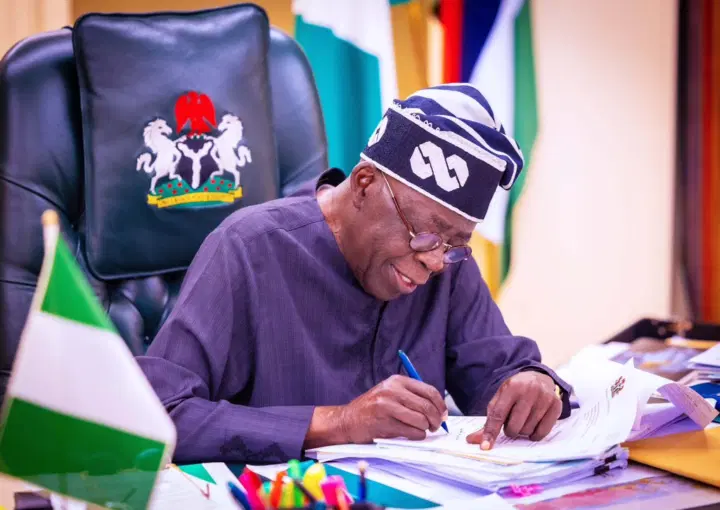
President Bola Tinubu has declared the elimination of child labour a national development priority, stressing that the menace poses serious challenges to education, poverty reduction, economic growth, food security, human capital development and national security.

Tinubu made the declaration on Wednesday in Abuja at the National Dialogue on Advancing the Implementation of Nigeria’s National Child Labour Policy and National Action Plan 2026–2030.

The event also featured the launch of the 2024 National Child Labour Survey Report.

The President, who was represented by the Secretary to the Government of the Federation, Dr George Akume, said his administration would intensify efforts to address the root causes of child labour and protect children from exploitation.

According to a statement by Akume’s media aide, Yomi Odunuga, Tinubu said the Federal Government would strengthen labour administration and inspection systems as part of measures to curb child labour across the country.

He added that the government would also reinforce child protection mechanisms and implement interventions aimed at tackling poverty, unemployment, inadequate access to quality education and social exclusion, which he identified as some of the factors driving child labour.

The President identified education as one of the strongest safeguards against child labour, noting that children who have access to quality education are better protected from exploitative work and other vulnerabilities.

He said the administration was implementing reforms targeted at reducing the number of out-of-school children, improving education data, strengthening teacher development and expanding skills acquisition opportunities.

Tinubu further highlighted the Renewed Hope National Home-Grown School Feeding Programme as another intervention aimed at encouraging school attendance and supporting vulnerable children.

According to him, the programme would help address hunger and nutritional challenges among children from vulnerable households while creating an environment that encourages them to remain in school.

The President reaffirmed the Federal Government’s commitment to implementing the National Child Labour Policy and National Action Plan 2026 to 2030 as part of broader efforts to protect children and promote sustainable national development…///

Veteran Actor Olu Jacobs Dies at 84

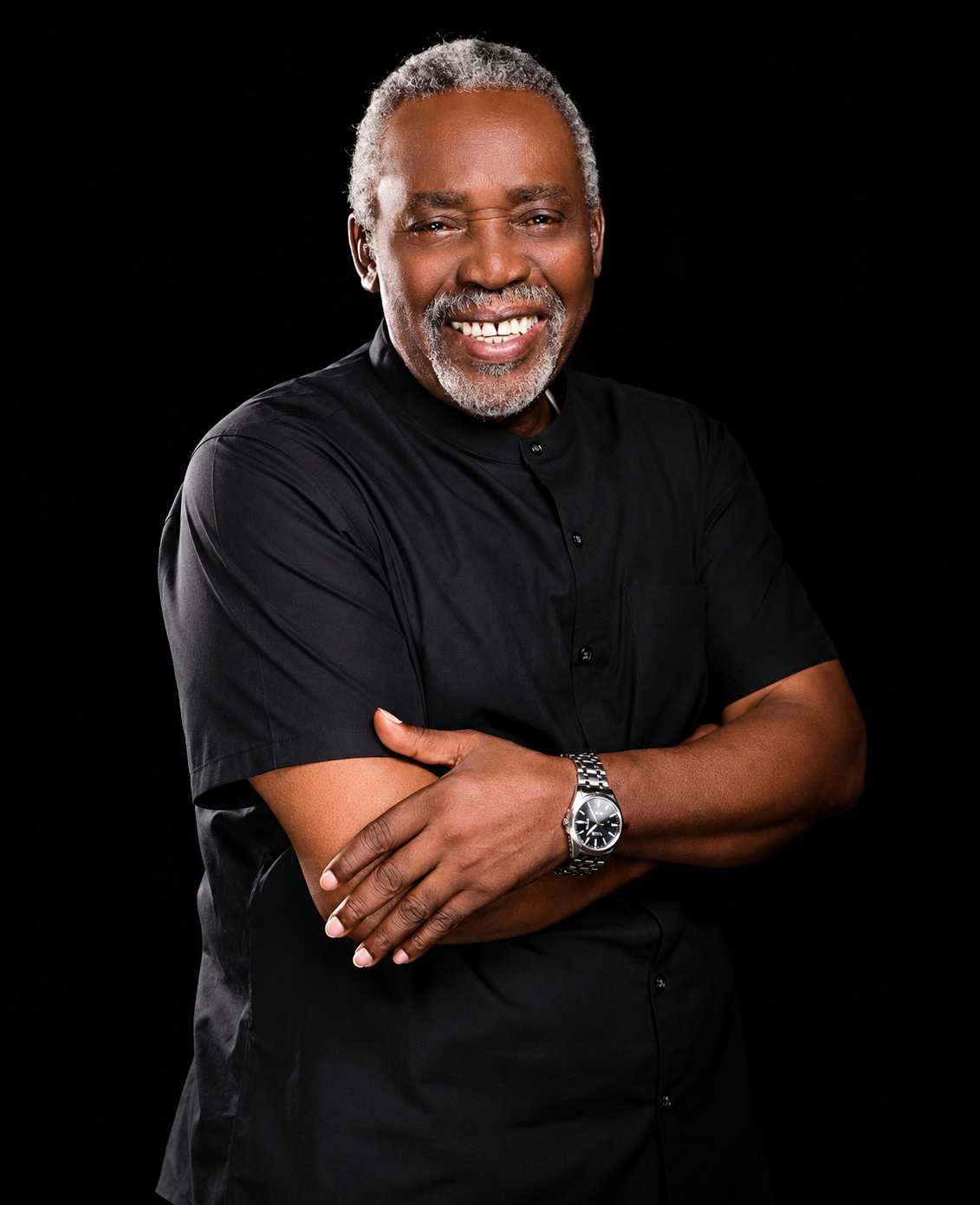
Veteran Nigerian actor and film executive, Oludotun Baiyewu Jacobs, popularly known as Olu Jacobs, has died at the age of 84.

His death was announced by his son, Olusoji Jacobs, on Instagram on Wednesday. The family described him as “The Lion of Lufodo” and appealed to bloggers and social media influencers to respect their privacy.

Jacobs was one of Nigeria’s most respected actors, with a career spanning more than five decades across theatre, television and film. He trained at the Royal Academy of Dramatic Art in England and began his acting career in Britain before returning to Nigeria.

He later became a prominent figure in Nollywood, earning recognition for his contributions to the Nigerian film industry and his work in international productions.

Jacobs won the Africa Movie Academy Award for Best Actor in a Leading Role in 2007. He also received the Industry Merit Award at the 2013 Africa Magic Viewers’ Choice Awards and the MAA Lifetime Achievement Award in 2016.

In 2011, he was conferred with the national honour of Member of the Order of the Federal Republic. He was married to fellow veteran actress, Joke Silva.

INEC Releases Final List of 18 Presidential Candidates for 2027 Election

The Independent National Electoral Commission (INEC) has released the final list of presidential candidates and their running mates for the 2027 general elections.

The list, signed by the Commission’s Secretary, Rose Oriaran-Anthony, was released in Abuja on Saturday and features candidates sponsored by 18 political parties.

Among the presidential candidates are incumbent President Bola Tinubu of the All Progressives Congress (APC), Atiku Abubakar of the African Democratic Congress (ADC), Peter Obi of the Nigerian Democratic Congress, Adewole Adebayo of the Social Democratic Party (SDP), and Oluseyi Makinde of the Allied Peoples Movement (APM).

Others include Donald Duke of the People’s Redemption Party (PRP), Sunday Chibuzo Okereke of the Labour Party, Omoyele Sowore of the African Action Congress (AAC), Sandy Ojang Onor of the Peoples Democratic Party (PDP), Rufai Omo-Aje of the Action Alliance and Aliyu Abbas-Bin of the Action Democratic Party.

The list also includes Kabiru Yusuf of the Allied Peoples Party, Sunday Adenuga of the Boot Party, Moses Adebisi of the Democratic Leadership Alliance, Nkem Esther Okereke of the National Rescue Movement, Daniel Nwanyanwu of the Zenith Labour Party and Peter Ada Agada of the Young Progressive Party.

INEC also listed 14 male and four female vice-presidential candidates.

The female running mates are Peace Egobia Ofordile of the Allied Peoples Party, Nafisat Usaku Abubakar of the Democratic Leadership Alliance, Hajja Bintu Konto of the Labour Party and Patience Ndidi Key of the Young Progressive Party.

The final list formally confirms the presidential contenders ahead of the 2027 election.

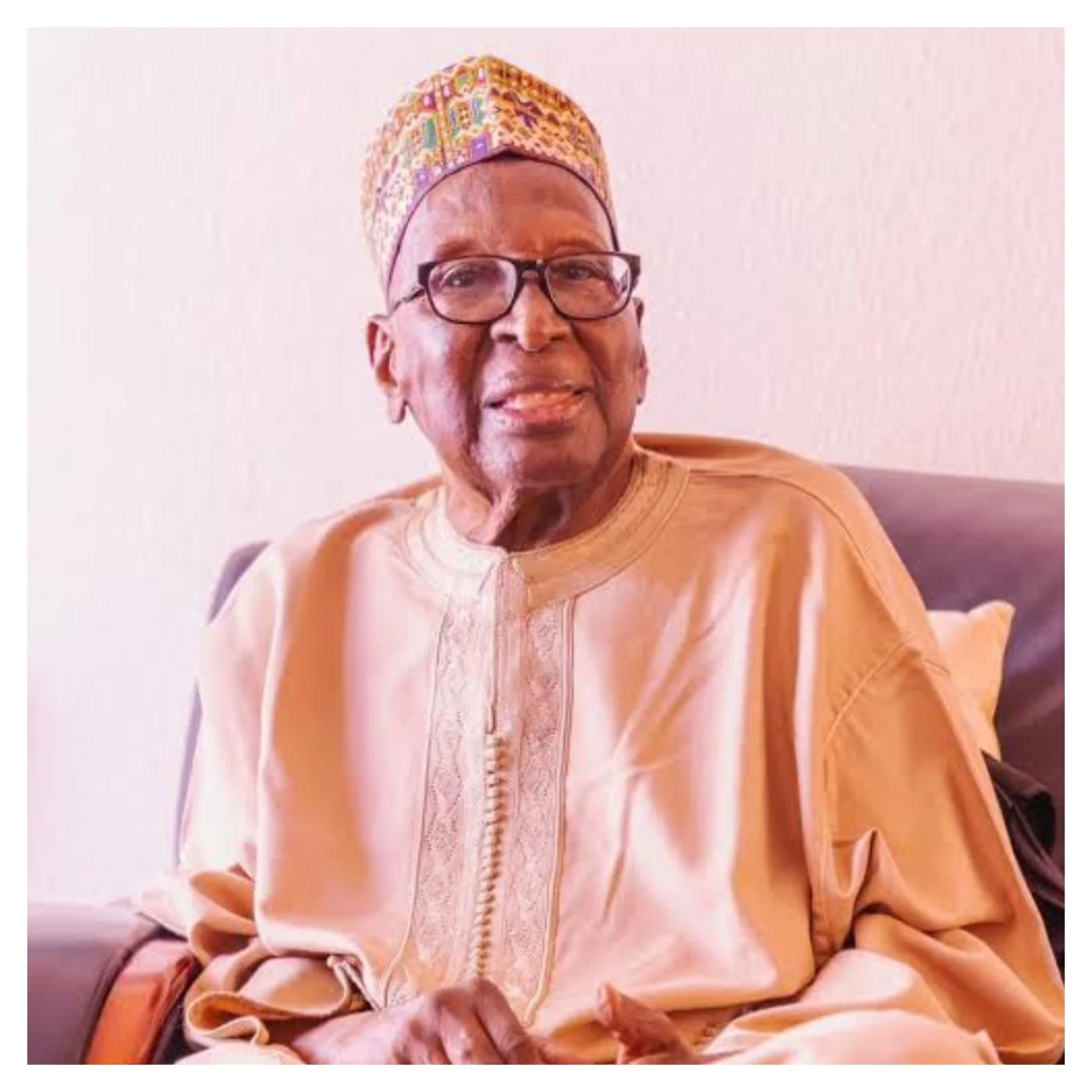
Former PDP National Chairman Bamanga Tukur Dies at 90

Former National Chairman of the Peoples Democratic Party (PDP), Bamanga Tukur, has died at the age of 90.

Tukur reportedly died in Abuja on Saturday, September 12, 2026, after a brief illness, according to a statement issued by his family and signed by his son, Awwal Tukur.

The family described him as a “beloved father and patriarch” who dedicated his life to serving his family, community, Adamawa State and Nigeria.

President Bola Tinubu, in a condolence message issued by his Special Adviser on Information and Strategy, Bayo Onanuga, described Tukur as a “towering figure” whose career spanned public administration, governance, industry, politics and pan-African business leadership.

Tukur, who was the first civilian governor of the defunct Gongola State, is scheduled to be buried on Sunday, September 13, in Yola, Adamawa State.

His son said funeral prayers would be held at the Lamido’s Palace by 10 a.m., after which the former PDP chairman would be laid to rest.

Meanwhile, Adamawa State Governor Ahmadu Fintiri has declared three days of mourning across the state in honour of the late elder statesman.

Fintiri described Tukur’s death as a monumental loss to Adamawa State and Nigeria, praising his courage, foresight, patriotism and lifelong commitment to public service.

IBEDC Apologises Over Blackouts in Ogun, Oyo, Kwara

The Ibadan Electricity Distribution Company, IBEDC, has apologised to Band A customers in Ogun, Oyo and Kwara states after several feeders failed to provide the required daily electricity supply hours on Monday.

The company blamed the outages on technical faults, load shedding, forced outages and disconnections linked to unpaid bills, with some feeders recording no power supply.

One of the affected feeders was the Water Works, Ojere 33kV feeder serving Arakanga Water Scheme and Iberekodo in Abeokuta, which IBEDC said was disconnected over non-payment.

Other affected feeders included those serving Papalanto Train Station in Ogun and Moniya Train Station in Ibadan, while the Joju feeder supplying parts of Owode, Ajibode and Iya Ilogbo experienced a prolonged outage due to a breaker fault.

IBEDC said some other Band A feeders recorded between 12 and 19 hours of supply due to equipment faults and load shedding, but reaffirmed its commitment to meeting the required supply hours.

Tinubu: Nigeria Must Turn Economic Stability Into Jobs, Investment

President Bola Tinubu says his administration is now shifting its focus from achieving economic stability to using that stability to drive investment, increase production, create jobs and improve Nigerians’ living standards.

Tinubu made this known on Tuesday at the 19th Annual Banking and Finance Conference in Abuja, where he said the economic reforms introduced by his government were beginning to deliver positive results.

The President, who was represented by the Minister of Finance and Coordinating Minister of the Economy, Taiwo Oyedele, said the banking and financial sector would be vital to achieving the country’s economic transformation.

Tinubu said stability should serve as the foundation for achieving greater prosperity.

He said his administration had implemented difficult reforms in foreign exchange, taxation, public finances and fiscal management to correct structural problems that had built up over several decades.

He pointed to the economy’s 4.43 per cent growth in the second quarter of 2026 and an estimated 17 per cent increase in GDP in US dollar terms during the first half of the year as evidence of progress.

The President also maintained that Nigeria was still on course to reach a $1 trillion economy by 2030, while its purchasing-power GDP had exceeded $2.2 trillion.

He further cited rising external reserves, now above $54 billion, declining inflation, increased investor confidence and positive assessments from international rating agencies as signs of economic improvement.

Tinubu called on banks to move beyond traditional financial intermediation and play a bigger role in transforming the economy by providing more funding to businesses and productive sectors.

He identified economic growth, financial inclusion, technology, long-term financing and public trust as key priorities for creating a stronger and more resilient financial system.

The President also called for deeper development of Nigeria’s capital markets, pension, insurance and asset management industries to attract long-term funding for infrastructure, manufacturing, housing and energy.

He stressed the importance of public confidence in the financial system, saying strong consumer protection and effective regulation were necessary to sustain financial stability.

Stakeholders Select Olori Odo as Iru Ekun Commandant in Ijebu North

The selection of a Commandant for the Iru Ekun security organization is currently generating discussions in Ijebu North, Ogun State, as stakeholders seek to determine the head of the organization.

Speaking on the matter, Comrade Mukaila Asebebe, Comrade Idowu Ayodele, popularly known as Olori Odo, Comrade Akeem Salisu, and Comrade Olusegun Dada, popularly known as Atilari, said they have been involved in security activities for several years.

According to the group, although Iru Ekun is a relatively new security organization, its members have longstanding experience in security work within Ijebu-Igbo and have remained committed to maintaining security in the area.

The group explained that important stakeholders and dignitaries came together to select Comrade Idowu Ayodele, also known as Olori Odo, as the Commandant. They said his years of involvement in security activities, good conduct, and absence of reported misconduct were among the factors considered in the selection.

The selection is currently at the centre of discussions in Ijebu North, with stakeholders expected to resolve the matter and establish the leadership structure of the Iru Ekun security organization.

INEC, Police Move Against Politicians Over Threats Ahead of 2027

The Independent National Electoral Commission (INEC) and the Nigeria Police Force (NPF) have vowed to take action against politicians who issue threats, make inflammatory remarks or attempt to intimidate opponents ahead of the 2027 general elections.

The warning comes amid growing concerns over statements by political actors that could heighten tension and trigger violence as political activities intensify across the country.

INEC said the Electoral Act 2026 gives it powers to monitor political campaigns and sanction political parties and candidates that violate electoral rules. The law prohibits threats, use of force and violence during campaigns.

Under the Act, anyone who threatens or uses force, violence or restraint to influence another person’s voting decision commits an offence and may face a fine of up to N2 million or three years’ imprisonment.

The police also said inciting statements constitute a criminal offence and that individuals found culpable would be arrested, investigated and prosecuted in accordance with the law.

The Force said it was preparing sensitisation campaigns for its officers and members of the public to discourage inflammatory political statements and prevent the escalation of tensions ahead of the elections.

Civil society organisations have also urged security agencies to ensure that politicians who make threats are prosecuted, warning that selective enforcement could undermine public confidence in the electoral process.

They noted that unchecked political intimidation could lead to pre-election violence, discourage voter participation and threaten the credibility of the 2027 elections.

Stakeholders have consequently called on political parties and their supporters to focus on issue-based campaigns and respect democratic principles as preparations for the elections continue. 

2027 Election: INEC Raises Alarm Over AI-Generated Fake News

The Independent National Electoral Commission (INEC) has warned that artificial intelligence-generated disinformation could threaten the credibility of the 2027 general elections.

INEC Chairman, Prof. Joash Amupitan (SAN), said the increasing use of AI to create fake audio, videos and images could make it harder for voters to distinguish genuine political information from fabricated content.

Amupitan spoke on Wednesday in Abuja through a National Commissioner, Sani Adam (SAN), at the 13th Annual International Conference of the Association of Communication Scholars and Professionals of Nigeria. His remarks were contained in a statement signed by INEC’s Director of Voter Education and Publicity, Victoria Eta-Messi.

The INEC chairman said the credibility of elections now depended not only on the integrity of the ballot, the Bimodal Voter Accreditation System and result sheets, but also on how electoral information was communicated, understood and trusted by voters.

He said INEC was carrying out a comprehensive audit of its electoral technology systems, including system redundancy, penetration testing and disaster recovery plans, ahead of the 2027 election.

Amupitan also disclosed that the commission was considering a mock presidential election to test its preparedness, including voter accreditation, result transmission and result viewing under conditions similar to election day.

He warned that generative AI had made it cheaper and more difficult to detect manipulated political content, while algorithmic microtargeting could allow different groups of voters to receive conflicting political messages.

According to him, such false content could spread to millions of social media users before fact-checkers or electoral authorities could verify it.

Amupitan further disclosed that INEC had proposed a substantial budget for technology and election operations, including new accreditation devices to replace those lost or damaged during the last electoral cycle.

He said the commission was awaiting the full release of the funds, while its ICT team had begun discussions with manufacturers and preparations for the technology audit and proposed mock election continued.