


ICPC uncovers two more fake agencies in PFIPC investigation

The Independent Corrupt Practices and Other Related Offences Commission (ICPC) has uncovered two additional fake government agencies allegedly linked to Adeniyi Matthew Adeyemi, the self-acclaimed Director-General of the Presidential Foreign Intervention Promotion Council (PFIPC), as its investigation into the alleged fraud expands.

ICPC Chairman, Dr. Musa Adamu Aliyu, disclosed this on Thursday while presenting the commission’s interim investigation report to President Bola Tinubu at the Presidential Villa in Abuja.

According to Aliyu, investigations confirmed that Adeyemi was never appointed by the Federal Government and that the PFIPC had no legal status, having neither been established by an Act of the National Assembly nor through an executive order.

The commission found that the appointment letter used by Adeyemi was forged and that the fake council unlawfully occupied offices and used official materials belonging to the defunct Presidential Economic Advisory Council (PEAC).

Aliyu said the group operated from the former PEAC office, allegedly engaging in impersonation, false representation and other fraudulent activities by exploiting weaknesses in government verification and coordination systems.

Further investigations also uncovered two other non-existent agencies — the FCT Investment Promotion Agency and the Foreign Investment Promotion Agency.

The ICPC chairman revealed that Adeyemi later changed the organisation’s name from the Foreign Investment Promotion Council to the Foreign Intervention Promotion Council in a bid to widen its activities to include revenue generation.

Based on its findings, the commission recommended Adeyemi’s prosecution, disciplinary action against public officials suspected of aiding the operation, and institutional reforms to strengthen internal controls across government agencies.

The interim report also identified officials from the Office of the Secretary to the Government of the Federation (OSGF), the Office of the Head of the Civil Service of the Federation, the Office of the Accountant-General of the Federation, the Budget Office of the Federation, and the National Information Technology Development Agency (NITDA) as alleged collaborators in the scheme.

Aliyu noted that investigations are still ongoing and said President Tinubu has been fully briefed on the findings, reaffirming his administration’s commitment to transparency, accountability and the prosecution of those found culpable.
Military salaries hit N924bn as Tinubu approves pay rise

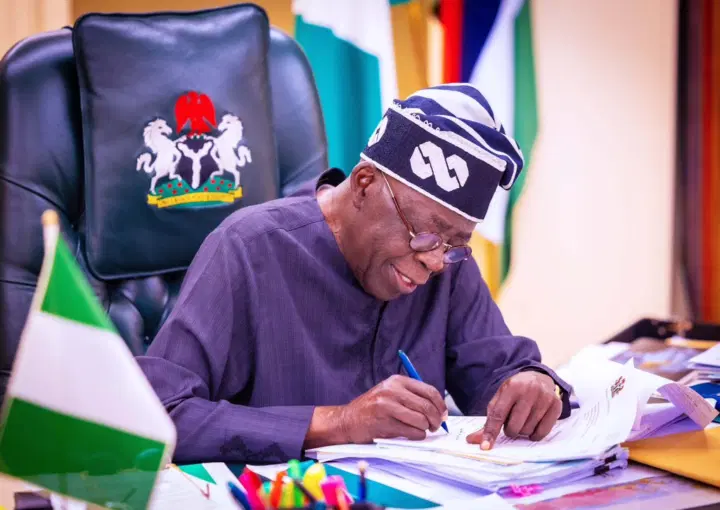
President Bola Tinubu has approved a salary increase of between 30 and 80 per cent for about 250,000 personnel of the Armed Forces, raising the military’s annual wage bill from ₦660 billion to ₦924 billion.

The new salary structure, which takes effect from September 1, 2026, grants the highest increase to junior personnel. Soldiers from the rank of Private to Staff Sergeant will receive an 80 per cent pay rise, while Warrant Officers to Colonels will get a 50 per cent increase. Senior officers from Brigadier-General to General will receive a 30 per cent salary adjustment.

The Presidency said the review is aimed at recognising the sacrifices of military personnel in the fight against terrorism, banditry and kidnapping, while reaffirming the Federal Government’s commitment to improving troop welfare and equipping the Armed Forces with modern weapons and technology.

The salary review will increase the Armed Forces’ annual wage bill by ₦264 billion, from ₦660 billion to ₦924 billion, making it the largest military pay increase under the Tinubu administration.

The development has been welcomed by retired military officers, who described it as a major morale booster capable of improving troop motivation, recruitment and operational effectiveness. They, however, urged the Federal Government to ensure prompt implementation and complement the salary review with improved logistics, accommodation, healthcare, modern equipment and other welfare packages.

Serving military personnel also welcomed the announcement but said they would reserve judgment until the new salaries are reflected in their bank accounts, stressing that effective implementation would be the true test of the government’s commitment to troop welfare.

Special Adviser to the President on Information and Strategy, Bayo Onanuga, said the salary structure was deliberately designed to favour junior personnel, with the highest percentage increases going to the lowest ranks.

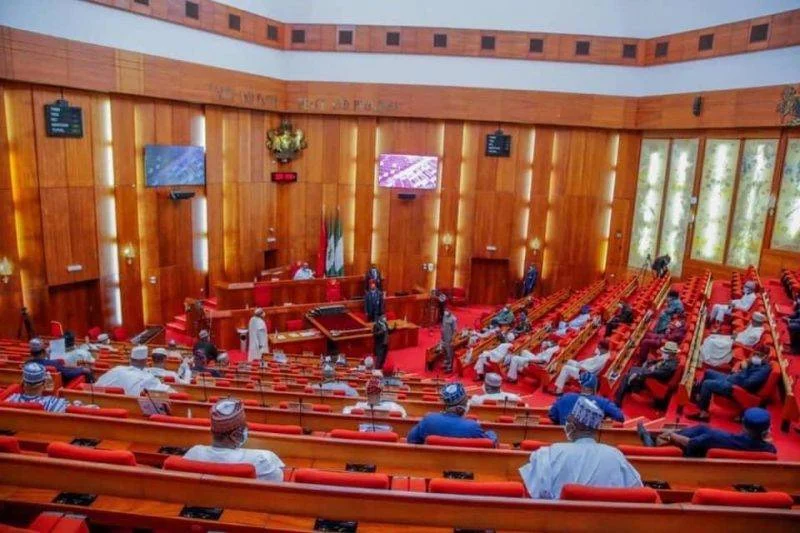
Senate Clears Bamidele, Adaramodu Over Commercial Bus Preaching Bill

The Senate has denied reports linking the Senate Leader, Senator Opeyemi Bamidele, and the Chairman of the Senate Committee on Media and Publicity, Senator Yemi Adaramodu, to the controversial proposal seeking penalties for preaching, hawking and trading inside commercial vehicles.

Reacting to the growing public backlash over the Federal Road Safety Corps (FRSC) Amendment Bill, 2026, Adaramodu clarified that neither he nor Bamidele sponsored or introduced the legislation.

The controversy followed the Senate’s consideration of the amendment bill, which retains a provision prescribing a ₦50,000 fine for anyone convicted of hawking, trading or preaching inside commercial vehicles.

The provision has attracted criticism from religious groups, civil society organisations, opposition parties and many Nigerians, who argue that it is insensitive amid the country’s economic challenges and rising unemployment.

However, the Senate maintained that the provision is not a new attempt to ban religious preaching or evangelism in public transport. According to the upper chamber, the clause has existed in the FRSC Act since 2007 and was merely retained in the amendment bill.

The Senate also clarified that the bill originated from the House of Representatives and was not sponsored by Senator Bamidele.

Adaramodu urged Nigerians not to assume that every debate or proposal in the National Assembly automatically becomes law. He explained that after a bill is considered by the Committee of the Whole, it may be adopted or rejected.

If adopted, the bill is forwarded to the other chamber of the National Assembly for concurrence, where it undergoes another round of legislative scrutiny. Any differences between both chambers are resolved by a joint conference committee before the harmonised version is transmitted to the executive.

He added that the bill is subsequently reviewed by the Federal Ministry of Justice and other relevant agencies before being presented to the President for assent.

According to the senator, only after completing all constitutional and legislative procedures can any bill become law.

Adaramodu also dismissed claims circulating on social media that he and Bamidele were responsible for the controversial provision, describing the reports as false and misleading.