Norway’s King Harald dies at 89

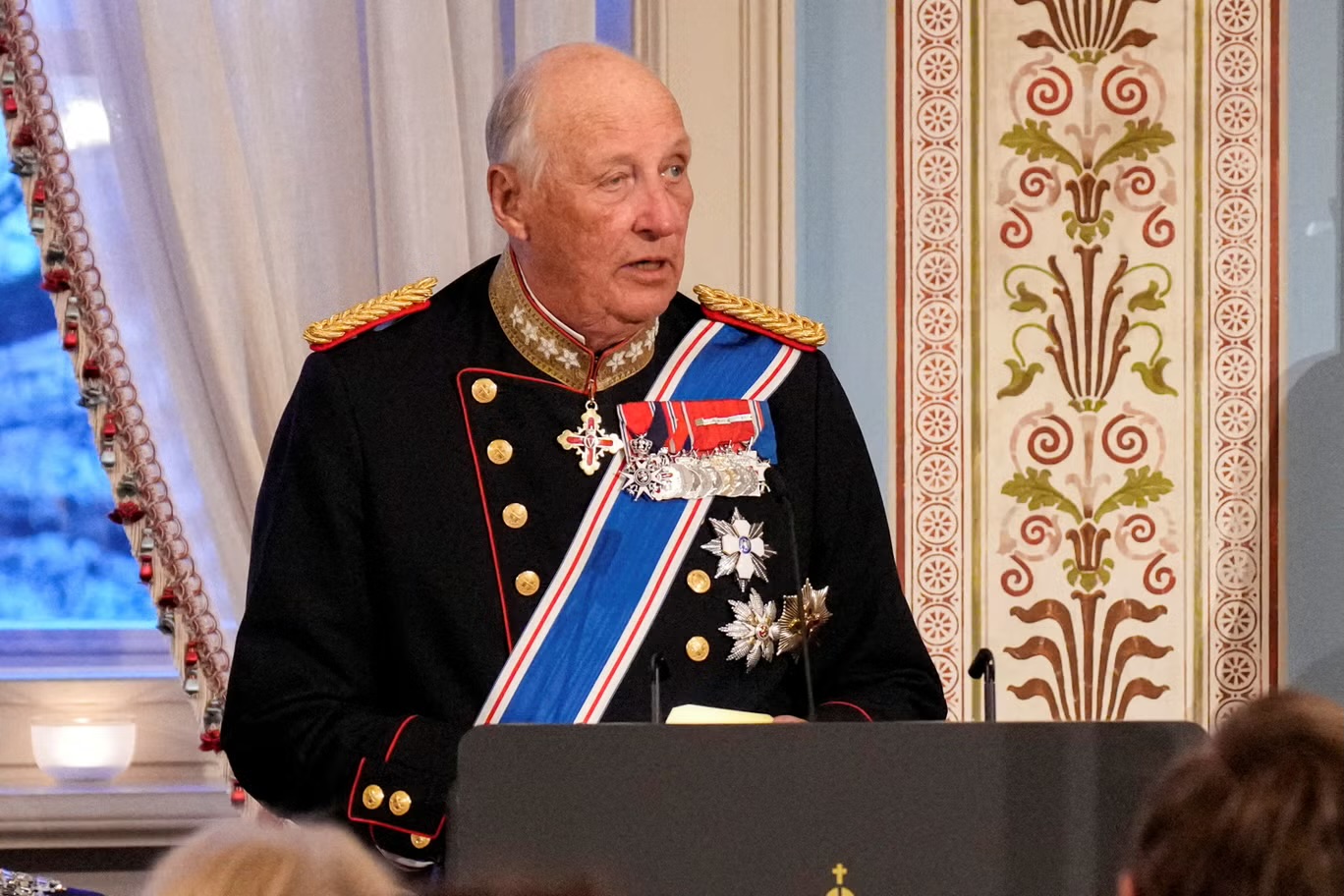
Norway’s King Harald V has died at the age of 89 after a prolonged period of health challenges, the Royal Palace announced on Friday.

The monarch died peacefully at Oslo University Hospital at 6:35 a.m. local time on August 28, after being admitted to the hospital on August 17 with haemolytic anaemia, a condition involving the rapid destruction of red blood cells.

Crown Prince Haakon, 53, is set to succeed his father as Norway’s new monarch.

King Harald’s health had deteriorated in recent years, with several medical complications leading to the installation of a pacemaker and a reduction in his official duties.

His family, including Queen Sonja, Crown Prince Haakon, his wife Mette-Marit and their children, gathered at the hospital as his condition became critical.

Flags at the Royal Palace in Oslo were lowered to half-mast as mourners gathered outside the palace to pay their respects.

Harald became king in 1991 and served for 35 years. Despite his declining health, he repeatedly rejected calls for abdication, maintaining that his commitment to the Norwegian throne was lifelong.

Dangote threatens to export petrol as imports rise

The Dangote Petroleum Refinery has warned that it may export excess petrol stocks as increasing imports complicate domestic demand forecasts and make inventory management more difficult.

The refinery said imported Premium Motor Spirit, commonly known as petrol, accounted for about 43 per cent of the fuel supplied to the Nigerian market in July, despite its ability to meet and surpass local demand.

It attributed the uncertainty to the continued issuance of petroleum product import licences, which it said was affecting demand forecasts and making it harder to determine the appropriate volume of petrol to keep in storage for the domestic market.

The refinery said it had maintained adequate stock levels and reserved petrol volumes to ensure uninterrupted supply to the Nigerian market since beginning operations, requiring substantial investments in storage facilities, logistics and working capital.

However, the company said the absence of clear information on the volume of imported petrol expected into the country was affecting its ability to efficiently plan production and manage inventory.

It explained that any petrol surplus that could not be immediately absorbed by the local market would have to be redirected to regional and international markets through exports.

The refinery said the rise in its export volumes should therefore not be viewed as an indication that it was unable to meet domestic demand, but rather as a consequence of excess stocks created by uncertainty surrounding the volume of imported petrol entering the country.

“However, the absence of transparency regarding the actual volume of imported products expected into the country makes effective production and inventory planning increasingly challenging. Maintaining large stock positions without clear visibility into import volumes imposes substantial carrying costs on the refinery and ultimately undermines efficient market operations,” it stated.

The company said exporting the excess petrol would help it avoid additional storage and financing expenses associated with maintaining large inventories.

It stressed that the development did not amount to a withdrawal from the Nigerian market, reaffirming its commitment to maintaining sufficient petrol supplies across the country.

Bill Gates Warns AI Could Permanently Eliminate Millions of Jobs

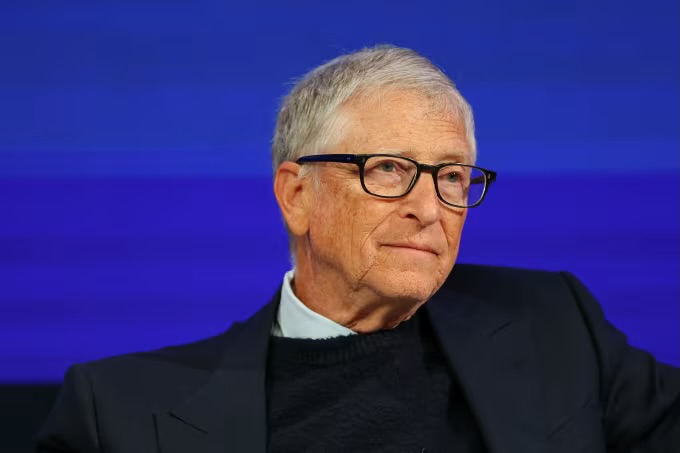
Microsoft co-founder, Bill Gates, has warned that the world’s transition into the artificial intelligence era could rank among the most disruptive periods in human history.

He said governments were failing to do enough to prepare for the widespread job losses and social and economic disruptions that could result from the rapid advancement of AI.

Gates made the remarks in a more than 6,000-word essay titled “The turbulent AI era is here. The choices we make now are critical,” published on his Gates Notes website on Wednesday.

According to him, AI could either help narrow global inequality or widen the gap between the wealthy and the poor, depending on how governments, businesses and societies manage its rapid growth.

“In terms of equity, AI will either be the greatest equalizer ever invented, or the worst source of injustice.

“The challenge is monumental. Even under the best circumstances, the transition to this new AI era will be one of the most turbulent times in human history,” he wrote.

Gates argued that the world was already lagging in preparing for the changes AI could bring, saying governments, experts and communities had not fully addressed the scale of the potential disruption.

“Unfortunately, right now we are not preparing for it. I don’t see evidence that leaders, experts, and communities are confronting the challenges adequately. There is no plan to ease the entry into the AI era,” he stated.

He said the rapid deployment of AI sets it apart from previous technological breakthroughs, which took considerably longer to transform workplaces.

“When the PC came along, it took 20 years to significantly change how we worked because the software had to be developed, the price had to come down, and people had to learn how to use the tools and incorporate them into their business processes.

“AI, on the other hand, runs on the devices we already have, and it uses natural language. We don’t have to adapt to it because it can adapt to us. It can watch the same training video that is used to train human workers and learn from existing data,” he hinted.

Gates listed widespread job losses among the three major threats posed by the AI transition, warning that the disruption could result in permanent changes to the labour market.

“Many jobs will disappear forever,” he wrote.

He said entry-level and mid-level workers could face the greatest risks, while many of the new roles created by AI may demand specialised skills that could take years to develop.

“AI may not reach this level, but its impact will not go away with an economic cycle. The jobs at most risk are entry- and mid-level, and the new jobs being created will mostly require skills that take many years to learn.”

Gates added that the effects of AI would not be limited to conventional technology and office-based jobs.

He further cautioned that blue-collar workers could eventually face similar disruption as advances in robotics accelerate, adding that he was especially concerned about young people preparing to enter the labour market.

According to Gates, the scale of the disruption could compel societies to rethink the traditional link between employment, income and economic security.

NFF President Gusau, Board Members Resign

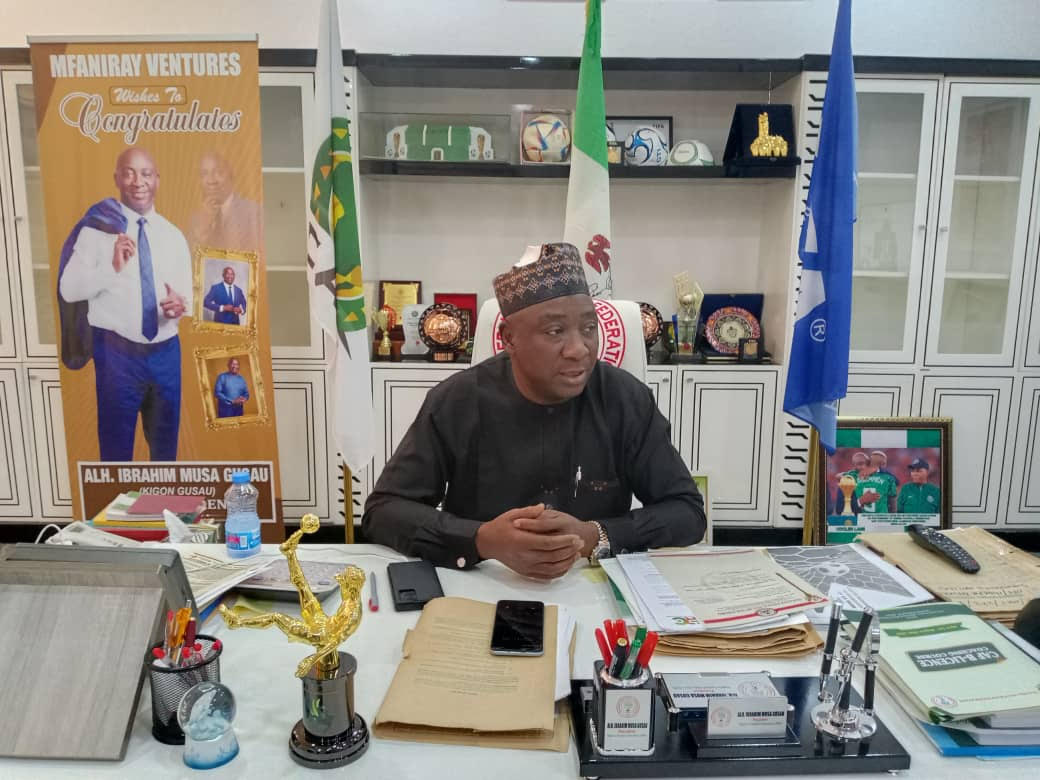
The President of the Nigeria Football Federation, Ibrahim Gusau, and other members of the NFF board have resigned from their positions.

The resignations come amid mounting criticism over the administration and management of Nigerian football under the current leadership.

The pressure intensified following the Super Falcons’ failure to qualify for the FIFA Women’s World Cup, marking the first time the team has missed the tournament.

The NFF leadership had also reportedly come under scrutiny from security agencies over the management and utilisation of funds released by the Federal Government for the national football teams.

The Department of State Services was said to have joined other security agencies in investigating the federation’s handling of the N17 billion intervention fund approved by President Bola Tinubu in 2024.

The funds were released to settle outstanding wages, bonuses and other financial obligations owed to players representing Nigeria’s national teams.

FG Targets 8,000MW Power Generation, Transmission by 2027

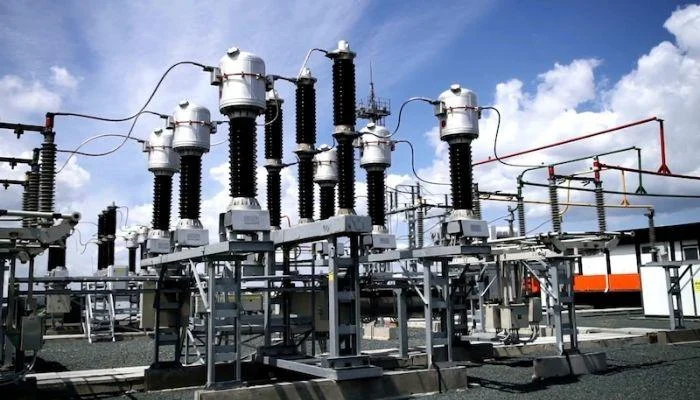
The Federal Government says it is aiming to achieve 8,000 megawatts of electricity generation and transmission by the end of 2027 as part of measures to boost power supply nationwide.

The Minister of Power, Joseph Tegbe, disclosed this on Wednesday in Abuja during the launch of the Renewable Energy Assets Management Company by the Rural Electrification Agency.

Tegbe said the government was targeting 6,500MW by the end of 2026, acknowledging that the country currently faces challenges in wheeling about 5,000MW of available electricity.

He expressed optimism that Nigerians would soon have access to round-the-clock electricity, describing the recent improvements in the power sector as the beginning of broader reforms aimed at transforming electricity supply.

The minister lamented that Nigeria had endured an embarrassing situation of inadequate electricity despite possessing significant power resources and infrastructure.

According to him, the newly established RAMCO is expected to adopt a new model for managing and sustaining renewable energy assets, with its mandate eventually expanding to cover the wider electricity grid.

Tegbe added that the government was developing a more flexible electricity system that would integrate grid power, embedded generation, interconnected and distributed renewable energy, energy storage and other emerging technologies.

Dollar exchanges at N1,346 official rate, N1,400 in parallel market

The Nigerian naira remained relatively stable against the United States dollar on Wednesday, although a noticeable difference persists between the official foreign exchange market and the parallel market.

The latest available data from the Nigerian Foreign Exchange Market (NFEM) placed the dollar at approximately ₦1,346.34 on Wednesday, reflecting the current benchmark exchange rate.

According to the Central Bank of Nigeria (CBN), the NFEM rate is calculated using the volume-weighted average of transactions carried out in the market and represents the official exchange rate for the day.

Other confirmed figures from the official market showed the naira closing at about ₦1,346.90 to the dollar, keeping the currency within the ₦1,347/$ range.

Meanwhile, the dollar was trading at approximately ₦1,400 in the parallel market on Wednesday, according to Aboki Forex, which regularly monitors and publishes street-market exchange rates.

At the parallel-market rate of ₦1,400 to the dollar, $100 would be worth about ₦140,000, while $1,000 would exchange for approximately ₦1.4 million.

The gap between the NFEM rate of ₦1,346.34 and the parallel-market rate of ₦1,400 stands at roughly ₦53.66 per dollar.

The naira’s relative stability comes amid improved conditions in Nigeria’s foreign exchange market. The previous week, the currency was trading at around ₦1,345/$ in the official market, compared with approximately ₦1,410/$ on the streets, indicating a reduction in the disparity between both markets.

The CBN’s latest data indicate that NFEM rates are determined from actual transactions in the official market. In contrast, parallel-market rates can vary during the day based on dollar availability, demand, location and transaction volumes.

Dolly Parton Dies at 80 After Six-Decade Music Career

Country music legend Dolly Parton has died at the age of 80.

Her death was reportedly announced on Tuesday by her nephew, Bryan Seaver, in an emotional post shared on Instagram.

Seaver described the moment as deeply painful, saying he had anticipated the weight of the loss but only fully understood it after her death.

Parton rose from humble beginnings in Tennessee to become one of the most influential figures in country music, enjoying a career that spanned more than six decades.

She sold more than 100 million records worldwide and earned the title “Queen of Country” through iconic songs such as “Jolene”, “9 to 5” and “I Will Always Love You”.

The singer-songwriter wrote more than 3,000 songs and won 11 Grammy Awards during her illustrious career. She also established herself as an accomplished actress, featuring in films including 9 to 5, The Best Little Whorehouse in Texas, Steel Magnolias and Joyful Noise.

“Jolene”, one of Parton’s most recognisable songs, was written around the same period as “I Will Always Love You”. Both tracks appeared on her 1974 album Jolene, which helped expand her popularity beyond the country music audience.

Concerns about Parton’s health emerged publicly in September 2025 when she postponed her Las Vegas residency. She had also reduced her public appearances in recent weeks amid reports of ongoing health challenges.

Her death comes months after the passing of her husband of nearly six decades, Carl Dean, who died in March 2025 at the age of 82.

Parton and Dean were married in 1966 and remained together for almost 60 years.

Awujale: Ruling House Sues Ogun, Kingmakers Over Succession Process

The Fusengbuwa Ruling House in Ijebu-Ode has taken the Ogun State Government, Awujale kingmakers and other officials to court over the stalled process for selecting a successor to the late Awujale and Paramount Ruler of Ijebuland.

The suit, filed at the Ogun State High Court in Ijebu-Ode, is seeking orders compelling the relevant authorities to resume and conclude the selection of the next monarch.

The case, dated August 21, 2026, was instituted by the Chairman of the ruling house, Abdulateef Owoyemi; Deputy Chairman, Adedokun Ajidagba; and Vice Chairman, Professor Fassy Yusuf.

Those named as defendants include Ogun State Governor Dapo Abiodun, Attorney-General and Commissioner for Justice Oluwasina Ogungbade (SAN), the Ogun State Executive Council, Commissioner for Local Government and Chieftaincy Affairs Ganiyu Hamzat, the Secretary of Ijebu-Ode Local Government, and the council’s chairman, Dare Alebiosu.

Also joined in the suit are members of the Awujale Afobaje/Kingmakers Council, including Sonny Kuku, Chief Rasheed Adesanya, Chief Oluwaranti Osifeso, Chief Jimi Lawal, Chief Abimbola Okenla, Chief Kunle Ogunade, Chief Agboola Alausa, Chief Adebisi Adaran and Chief Ayotunde Odulaja.

The plaintiffs are asking the court to determine whether the state government had the authority to order or facilitate the alleged entry into and closure of the Awujale Palace on January 20, 2026, which they said prevented the kingmakers from meeting to complete the selection process.

They are also asking the court to determine whether the Ogun State Obas and Chiefs Law 2021 gives the state government the power to suspend the nomination or selection of an Awujale.

The ruling house further wants the court to determine whether it fulfilled its statutory obligation after convening its meeting and completing its internal nomination process within the timeframe stipulated by the law.

The plaintiffs also want the court to determine whether the kingmakers became legally bound to choose a candidate from the list submitted by the ruling house and forward the selected name to the Ogun State Executive Council.

Another issue before the court is whether the succession process had officially commenced following notices issued by Ijebu-Ode Local Government on December 2 and 4, 2025, and January 6, 2026.

The Awujale stool became vacant after the death of Oba Sikiru Kayode Adetona on July 13, 2025, at the age of 91, following a historic 65-year reign.

According to the plaintiffs, Ijebu-Ode Local Government notified the Fusengbuwa Ruling House on December 2, 2025, that it was its turn to nominate a candidate in line with the rotational arrangement under the state’s chieftaincy law.

The ruling house subsequently began its nomination exercise and held a meeting on January 12, 2026, which it said was within the 14-day period stipulated by Section 16(1)(b) of the law.

The plaintiffs said 95 princes and princesses were nominated, with the complete list submitted to the nine-member Awujale Afobaje Kingmakers Council on January 19, 2026, for the next phase of the process.

They alleged that fewer than 24 hours after the list was submitted, police officers entered the Awujale Palace after midnight on January 20 and prevented the kingmakers from meeting to select a candidate from the nominees.

The local government later cited security concerns and allegations of bribery and financial inducement as reasons for the suspension of the process by the state government.

The ruling house rejected the allegations, maintaining that no evidence or formal petition was presented to substantiate the claims. It further alleged that investigations by the police and the Department of State Services found no evidence of wrongdoing.

In the suit, the plaintiffs are seeking a declaration that their nomination exercise was validly concluded and that the kingmakers are required under Sections 16(1)(e) and (f) of the law to select a candidate from the submitted list and forward the name to the State Executive Council.

They also argued that the Executive Council has a statutory duty under Section 22 of the law to act on the candidate presented by the kingmakers.

Among the reliefs being sought is an order directing the kingmakers to reconvene within seven days of judgment and conclude the selection process.

The plaintiffs are also seeking an injunction preventing the state government and security agencies from further interfering with the process.

They are asking the court to determine whether, having completed its internal nomination exercise within the period prescribed by Section 16 of the Obas and Chiefs Law, the Fusengbuwa Ruling House had fully discharged its statutory responsibility and could not be compelled to restart the process.

The plaintiffs also want the court to determine whether the kingmakers, after receiving the ruling house’s nomination list on January 19, became obligated under Section 16(1)(e) and (f) to select a candidate and forward the name to the Commissioner responsible for chieftaincy affairs.

They further want the court to determine whether Section 22 of the law places an obligation on the State Executive Council to act once a candidate has been selected and presented to it.

Another question before the court is whether the governor, relevant commissioners, local government officials or any other defendants had the legal authority to order or facilitate the forcible entry into and locking of the Awujale Palace by police officers on January 20.

Consequently, the plaintiffs are seeking a declaration that their January 12 nomination exercise, conducted pursuant to the notices issued in December 2025 and January 2026, constituted a full discharge of their statutory responsibility.

They are also asking the court to declare that the kingmakers, having received the nomination list on January 19, are legally required to select a candidate from it and forward the name to the appropriate state authority.

The plaintiffs further want the court to declare the closure of the Awujale Palace and the resulting suspension of the selection exercise unlawful, arguing that it was beyond the powers provided under the Ogun State Obas and Chiefs Law 2021 and violated their right to fair hearing.

Counsel to the claimants, led by Olusegun Otayemi, submitted in the originating summons that the state’s chieftaincy legislation establishes a clear sequence involving nomination, selection and government approval, which must be followed once the process has commenced.


Tears as Nollywood Icon Ogogo Is Laid to Rest

Tears and grief filled Ilaro, Ogun State, on Monday as the remains of veteran Nollywood actor, Taiwo Hassan, popularly known as Ogogo, were laid to rest.

Family members, friends, colleagues and sympathisers gathered in the actor’s hometown to observe the burial rites of the 66-year-old thespian.

Footage from the funeral procession showed mourners carrying Ogogo’s remains to his final resting place in line with Islamic burial traditions.

Among those present was Ogogo’s longtime friend and colleague, Yinka Quadri, who broke down in tears as mourners tried to comfort him.

The emotional moment underscored the depth of sorrow among the actor’s colleagues, relatives and loved ones as they paid their final respects.

Several Nollywood stars, including Jide Kosoko, Faithia Balogun, Femi Adebayo, Mr Latin and Toyosi Adesanya, had earlier travelled to Ilaro to attend the burial.

Other actors, including Ireti Osayemi and Bisi Omo Logbalogba, were also present alongside family members, friends and sympathisers.

The burial followed the arrival of Ogogo’s remains in Ilaro on Sunday, shortly after the actor died at the age of 66.

FG Spends N6.47tn on Infrastructure as Highways Take Lion’s Share

The Federal Government spent N6.47 trillion on strategic infrastructure projects between June 2023 and December 2025, with major highway projects accounting for more than half of the total expenditure.

An analysis of the newly released Federal Government Nigeria Reform Scorecard on savings from fuel subsidy removal, titled “The Benefits, Costs and Harm Prevented,” showed that the Lagos-Calabar Coastal Highway received the largest allocation among the strategic infrastructure projects listed, with N2.23tn disbursed for its construction.

The Sokoto-Badagry Superhighway ranked second with N1.11tn, while N489.3bn was spent on the Trans-Sahara Superhighway. Combined, the three highway projects accounted for about N3.83tn of the N6.47tn allocated to strategic infrastructure during the period under review.

The scorecard, which covered June 2023 to December 2025, outlined how the Federal Government deployed additional fiscal resources generated or made available through its economic reform measures.

According to the document, the government recorded incremental expenditure of N30.64tn during the period, with N6.47tn directed towards strategic infrastructure development.

On Wednesday, the Federal Government disclosed that it had spent N30.64tn to cushion the impact of petrol subsidy removal and other major economic reforms, while the reforms generated N15.8tn in savings for the Federation.

Finance Minister and Coordinating Minister of the Economy, Taiwo Oyedele, said the removal of the petrol subsidy and the unification of the foreign exchange market helped mobilise N15.8tn in additional resources for the Federation during the period.

Further analysis of the scorecard showed that the Lagos-Calabar Coastal Highway, one of the four legacy road projects of the current administration, received N2.23tn, representing about 34 per cent of the N6.47tn spent on strategic infrastructure.

The Sokoto-Badagry Superhighway received N1.11tn, while N489.3bn was allocated to the Trans-Sahara Superhighway. Other significant expenditures included N366bn for emergency road intervention projects and N304.2bn for Section II of the Abuja-Kaduna-Kano Road.

The Federal Government also allocated N291.3bn to the Lekki Deep Sea Port Access Road, N250bn to the Renewed Hope Smallholder Support Programme and N228.4bn to the Ilesha-Akure-Benin road section.

The scorecard also recorded N124.7bn for the construction of 1,550 housing units for personnel of the Nigerian Armed Forces, while N109.9bn was spent on Operation Lake Sanity, a multinational security operation.

The Ministry of Finance said the infrastructure interventions were designed to tackle longstanding constraints to investment and economic growth.

The spending comes as the Federal Government continues to pursue major road and transport infrastructure projects amid growing pressure from rising debt-service obligations, wage adjustments and other recurrent expenditures.