

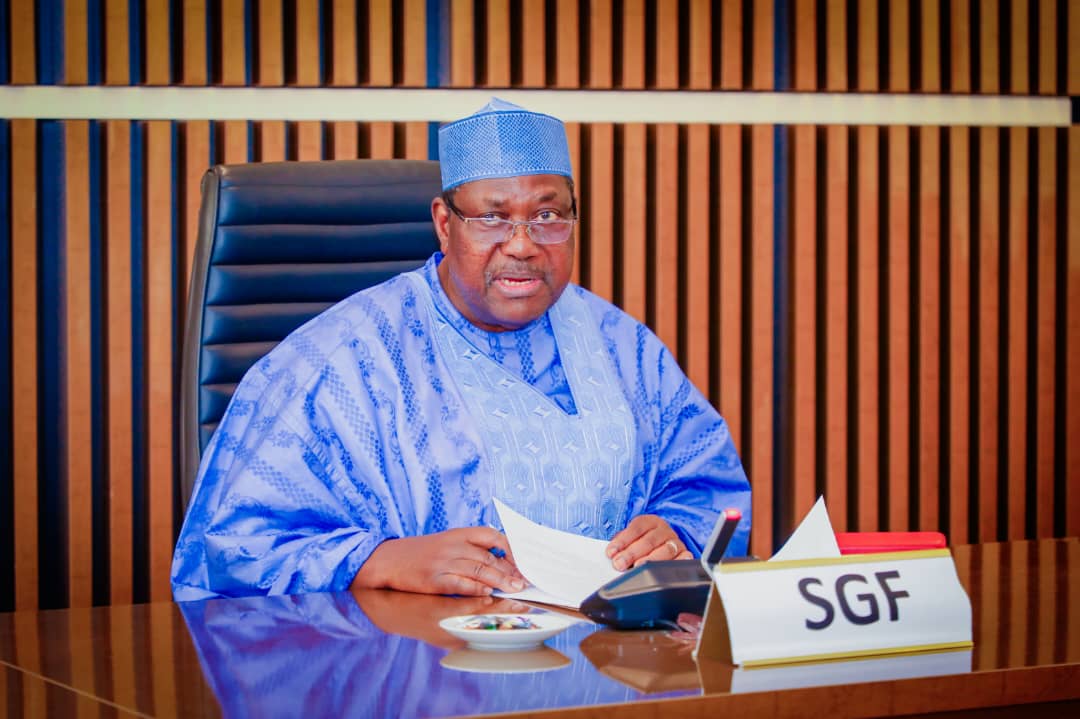
FG Stops Payments for Unapproved Foreign Trips by Appointees

The Federal Government has directed all Ministries, Departments and Agencies (MDAs) to suspend the processing of payments for official foreign trips undertaken by government appointees without prior approval from the Office of the Secretary to the Government of the Federation (OSGF).

The directive was contained in a circular dated August 13, 2026, signed by the Secretary to the Government of the Federation, George Akume, and addressed to the Chief of Staff to the President, ministers, Heads of the Civil Service, service chiefs, heads of federal agencies, as well as chief executives of parastatals and government-owned companies.

The circular, referenced PRS59648/S.13/TI/335, stated that despite existing regulations governing official foreign travel, “some Federal Government appointees continue to embark on official foreign trips without obtaining prior approval from the Office of the Secretary to the Government of the Federation, contrary to extant government directives and established administrative procedures.”

The government noted that it had issued no fewer than five circulars since 2012 aimed at regulating foreign travels by cabinet members and other public officials. However, the circular observed that cases of non-compliance have persisted, describing the development as one that undermines efforts to promote effective coordination, accountability, transparency and prudent management of public funds.

Under the new directive, accounting officers, permanent secretaries, chief executive officers and heads of Federal Government agencies are required to ensure that no expenditure connected to official foreign trips by government appointees is processed without evidence that the necessary approval has been obtained from the OSGF.

The circular also directed the Ministry of Foreign Affairs to make the presentation of valid OSGF approval a mandatory condition for processing Notes Verbales, diplomatic facilitation and visa applications for government appointees travelling outside the country on official assignments.

In addition, foreign missions and embassies accredited to Nigeria are to be formally informed that applications for official, diplomatic or service visas submitted by government appointees must be accompanied by valid approval for the proposed foreign trip from the OSGF.
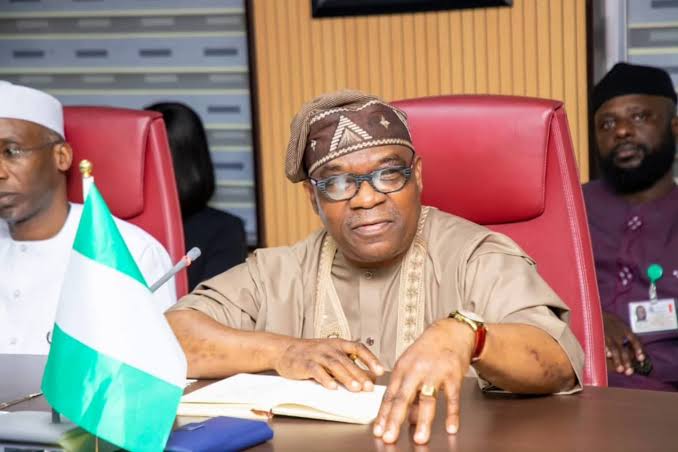
FG Demands End to Xenophobic Attacks on Nigerians in South Africa

The Federal Government has urged the South African government to take urgent and decisive steps to bring an end to xenophobic and Afrophobic attacks targeting Nigerians and other African nationals living in the country.

It also called for stronger migration governance, responsible political leadership and deeper people-to-people relations among African countries as part of efforts to prevent renewed violence and protect migrants from attacks.

The Minister of State for Foreign Affairs, Amb. Sola Enikanolaiye, made the call on Tuesday during a virtual roundtable titled “South Africa’s Xenophobia in Comparative Perspective,” organised by the Nigerian Institute of International Affairs.

According to a statement issued on Wednesday by his Special Adviser on Digital Media and Public Diplomacy, Raphael Oni, the minister said Nigeria considered the situation a serious challenge that must be confronted without either denying its existence or exaggerating its scale. He maintained that the term Afrophobia more accurately described the nature of the attacks.

Enikanolaiye described the violence as having “a particularly African, post-colonial and post-apartheid character,” stressing that the attacks should be viewed within the broader historical and political context of the continent.

The minister expressed concern over what he described as the irony of citizens from countries that stood firmly with South Africa during its struggle against apartheid now being treated as “unwanted outsiders” in the country.

To ensure that Nigeria’s historical contributions to South Africa’s liberation struggle are properly documented and preserved, Enikanolaiye said the Ministry of Foreign Affairs had directed the Nigerian Institute of International Affairs to conduct a comprehensive study of the country’s role in supporting the anti-apartheid struggle.

He said Nigeria’s financial contribution to the liberation struggle was estimated at more than $60 billion, while the country also supported the cause through the nationalisation of British Petroleum, provision of scholarships and the extension of hospitality to South African leaders who sought refuge or support in Nigeria.

“The relationship between Nigeria and South Africa is not reducible to trade statistics or diplomatic communiqués. There is history in that relationship. There is blood, sacrifice and solidarity in that history,” the minister said.

Enikanolaiye said Nigeria remained particularly concerned about the loss of lives associated with Afrophobic violence, revealing that approximately 90 Nigerians had been killed in such attacks since June 2022.

He further disclosed that incidents of fresh attacks and displacement had continued to occur in 2026, raising renewed concerns over the safety and security of Nigerians and other African nationals residing in South Africa.

According to the minister, the continued violence could damage South Africa’s international image, undermine investor confidence and weaken efforts towards deeper regional integration across the continent.

He also warned that the attacks could diminish the moral authority and goodwill South Africa gained from its historic liberation struggle, particularly among African countries that played significant roles in supporting the country’s fight against apartheid.

To tackle the problem, Enikanolaiye called on South African authorities to establish more transparent, effective and humane migration systems, while ensuring that the enforcement of immigration laws remained the exclusive responsibility of the government and its authorised institutions.

He cautioned against vigilantism and appealed to political leaders to exercise greater restraint in their public statements, noting that portraying migrants as “criminals” or “job thieves” could fuel resentment and create conditions that encourage violence against foreign nationals.

The minister also advocated greater reliance on verified facts and credible data in public discussions about migration, rather than misinformation, rumours and inflammatory claims that continue to circulate widely on social media platforms.

Enikanolaiye called for the full activation of existing Nigeria-South Africa early-warning and rapid-response mechanisms, stressing that such mechanisms could help both countries identify emerging tensions early and take appropriate measures to prevent them from escalating into violence.