
2027 Election: INEC Raises Alarm Over AI-Generated Fake News

The Independent National Electoral Commission (INEC) has warned that artificial intelligence-generated disinformation could threaten the credibility of the 2027 general elections.

INEC Chairman, Prof. Joash Amupitan (SAN), said the increasing use of AI to create fake audio, videos and images could make it harder for voters to distinguish genuine political information from fabricated content.

Amupitan spoke on Wednesday in Abuja through a National Commissioner, Sani Adam (SAN), at the 13th Annual International Conference of the Association of Communication Scholars and Professionals of Nigeria. His remarks were contained in a statement signed by INEC’s Director of Voter Education and Publicity, Victoria Eta-Messi.

The INEC chairman said the credibility of elections now depended not only on the integrity of the ballot, the Bimodal Voter Accreditation System and result sheets, but also on how electoral information was communicated, understood and trusted by voters.

He said INEC was carrying out a comprehensive audit of its electoral technology systems, including system redundancy, penetration testing and disaster recovery plans, ahead of the 2027 election.

Amupitan also disclosed that the commission was considering a mock presidential election to test its preparedness, including voter accreditation, result transmission and result viewing under conditions similar to election day.

He warned that generative AI had made it cheaper and more difficult to detect manipulated political content, while algorithmic microtargeting could allow different groups of voters to receive conflicting political messages.

According to him, such false content could spread to millions of social media users before fact-checkers or electoral authorities could verify it.

Amupitan further disclosed that INEC had proposed a substantial budget for technology and election operations, including new accreditation devices to replace those lost or damaged during the last electoral cycle.

He said the commission was awaiting the full release of the funds, while its ICT team had begun discussions with manufacturers and preparations for the technology audit and proposed mock election continued.
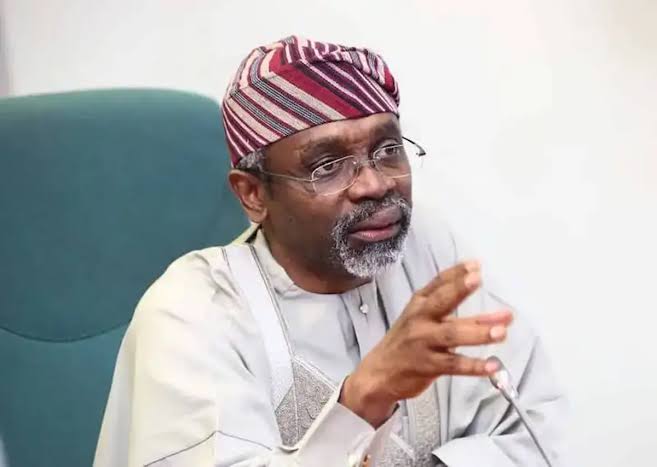

PFIPC: Reps Panel Clears Gbajabiamila, Links 12 Agencies, 58 Bank Accounts to DG

The House of Representatives Ad Hoc Committee investigating the controversial Presidential Foreign Intervention Promotion Council, PFIPC, has cleared the Chief of Staff to the President, Femi Gbajabiamila, of allegations that he authorised, created or took part in the activities of the purported agency.

The committee, chaired by Rep. Yusuf Adamu Gagdi, said its preliminary investigation found that the organisation was not legally established by the Federal Government. It also said documents allegedly presented to give the body presidential and legislative backing were forged, fabricated or altered.

The committee specifically examined a letter purportedly appointing Prince Adeniyi Adeyemi as Director-General of the PFIPC, which allegedly carried Gbajabiamila’s authority and signature. It found that the letter was not issued by the Chief of Staff or the Presidency.

According to the lawmakers, evidence obtained from the State House showed that no such appointment was made or approved by the Presidency, adding that Gbajabiamila neither issued nor signed the letter.

The committee also discovered that the letterhead used on the document was not genuine State House letterhead, while the reference number on it did not conform to the Presidency’s official numbering system.

It said the format, language and administrative details contained in the document were significantly different from those used in official State House correspondence.

The lawmakers therefore made a preliminary finding that the alleged appointment letter was fabricated and falsely presented as an official document from the Presidency.

The finding clears Gbajabiamila of the allegation, as the committee said it found no evidence connecting him to the purported appointment or the activities of the organisation.

Instead, the committee said documents before it showed that Gbajabiamila took steps to initiate investigations after concerns about the organisation were brought to his attention.

It said that after receiving an alert from the Nigerian Investment Promotion Commission, NIPC, over suspected fraud and the alleged misuse of government materials, Gbajabiamila acted within 24 hours by contacting security and investigative agencies.

Those agencies included the Nigeria Police Force, the Office of the National Security Adviser, the Department of State Services, DSS, and the Economic and Financial Crimes Commission, EFCC.

The committee added that the Chief of Staff also directed relevant government institutions to carry out administrative verification of the organisation.

It further said that when fresh concerns emerged, including those linked to a proposed World Investment Summit, additional communications were sent to relevant authorities requesting investigations and appropriate action.

Uber Announces Exit From Nigeria

Uber has announced that it will discontinue its ride-hailing services in Nigeria following a review of its business operations in the country.

The ride-hailing company disclosed this in a message sent to drivers on Wednesday, stating that its services would officially end on September 2, 2026.

Uber informed its drivers that they would no longer receive requests from passengers through the Uber app once the shutdown takes effect.

The company described the decision as a difficult one and thanked its drivers for their support and contributions throughout its years of operation in Nigeria.

Uber also recognised the efforts of its drivers in providing transportation services and helping people move around Nigerian cities.

The company said it was proud of the impact its platform had made in Nigeria, noting that it served as a technology link between passengers and independent drivers.

However, Uber did not give specific reasons for its decision to discontinue its operations in the country.

The company said its Help Centre would remain available to drivers who have questions about the shutdown until September 24, 2026.

The decision marks a major change in Nigeria’s ride-hailing sector, with Uber joining other app-based transportation services operating in the country.

WASSCE Result Verification Fee Now at N4,000

Candidates seeking admission into Nigerian tertiary institutions will now pay a one-time fee of N4,000 to verify their West African Senior School Certificate Examination (WASSCE) results, the Joint Admissions and Matriculation Board (JAMB) and the West African Examinations Council (WAEC) have announced.

The clarification was made in a joint statement released by JAMB and WAEC on Tuesday after discussions over the newly introduced system for remote uploading and verification of O’Level results.

Under the new arrangement, candidates whose admissions are handled by JAMB will verify their WAEC results once through the board. The verified result will then be sent to the institution where the candidate is seeking admission.

JAMB and WAEC said candidates would not have to pay any additional verification fee to their chosen institutions.

The examination bodies also instructed tertiary institutions to use the verified results sent by JAMB for admission screening, processing and other related activities.

The development follows JAMB’s introduction of a system that allows candidates to upload and verify their O’Level results from home or any location with internet access.

The new process removes the need for candidates to visit JAMB-approved Computer-Based Test centres solely to verify their results.

JAMB said the system was initially introduced for WAEC results and would allow it to confirm candidates’ results directly with the relevant examination bodies.

The initiative is part of efforts to make admission services faster, safer and more convenient for candidates.

Following Tuesday’s clarification, JAMB and WAEC confirmed that result verification through JAMB will only be done once, with the verified result available for use by the relevant institution.

WAEC has also given JAMB permission to forward the verification outcome to the tertiary institutions concerned.

The two agencies said the arrangement would prevent candidates from having to undergo and pay for separate result verification processes at different institutions after completing the verification through JAMB.

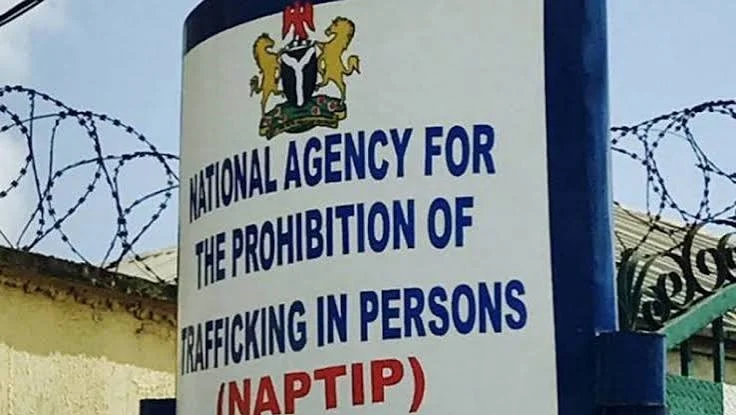
NAPTIP Raises Alarm Over CSOs Being Used as Fronts for Human Trafficking

The National Agency for the Prohibition of Trafficking in Persons (NAPTIP) has warned that some civil society organisations (CSOs) are allegedly being used as fronts by human traffickers to gain access to vulnerable communities and traffic children.

The agency said traffickers were taking advantage of communities affected by insecurity, including farmer-herder conflicts, by posing as NGO representatives and offering support to families.

NAPTIP’s Head of Press and Public Relations, Vincent Adekoye, disclosed this on Tuesday in Abuja during a joint press briefing involving spokespersons of security agencies.

Adekoye said the agency had uncovered cases where suspected traffickers entered troubled communities under the guise of providing education and humanitarian assistance.

He revealed that NAPTIP recently rescued four children in Onitsha, Anambra State, who were allegedly trafficked from Kajuru in Kaduna State in 2023.

According to him, some of the children were found in a high-rise building, while another was rescued from the custody of a nurse at the Federal Medical Centre in Onitsha.

Adekoye said NAPTIP would begin profiling CSOs, especially community-based and faith-based organisations operating in vulnerable areas, to stop criminals from using their reputation to facilitate trafficking.

He said the agency had so far rescued 118 children allegedly trafficked from Nasarawa, Benue and three other states in the North-Central region.

He urged Nigerians to remain alert and report suspicious organisations or individuals attempting to take children away from their families.

The warning follows recent NAPTIP operations in which more than 180 children were reportedly rescued from trafficking networks allegedly operating under the cover of civil society organisations and promising educational support to vulnerable families.

NAPTIP also raised concerns about the growing use of technology in human trafficking, noting that traffickers are using social media to lure young Nigerians with promises of well-paying jobs and better living conditions in Asian countries.

Norway’s King Harald dies at 89

Norway’s King Harald V has died at the age of 89 after a prolonged period of health challenges, the Royal Palace announced on Friday.

The monarch died peacefully at Oslo University Hospital at 6:35 a.m. local time on August 28, after being admitted to the hospital on August 17 with haemolytic anaemia, a condition involving the rapid destruction of red blood cells.

Crown Prince Haakon, 53, is set to succeed his father as Norway’s new monarch.

King Harald’s health had deteriorated in recent years, with several medical complications leading to the installation of a pacemaker and a reduction in his official duties.

His family, including Queen Sonja, Crown Prince Haakon, his wife Mette-Marit and their children, gathered at the hospital as his condition became critical.

Flags at the Royal Palace in Oslo were lowered to half-mast as mourners gathered outside the palace to pay their respects.

Harald became king in 1991 and served for 35 years. Despite his declining health, he repeatedly rejected calls for abdication, maintaining that his commitment to the Norwegian throne was lifelong.

Dangote threatens to export petrol as imports rise

The Dangote Petroleum Refinery has warned that it may export excess petrol stocks as increasing imports complicate domestic demand forecasts and make inventory management more difficult.

The refinery said imported Premium Motor Spirit, commonly known as petrol, accounted for about 43 per cent of the fuel supplied to the Nigerian market in July, despite its ability to meet and surpass local demand.

It attributed the uncertainty to the continued issuance of petroleum product import licences, which it said was affecting demand forecasts and making it harder to determine the appropriate volume of petrol to keep in storage for the domestic market.

The refinery said it had maintained adequate stock levels and reserved petrol volumes to ensure uninterrupted supply to the Nigerian market since beginning operations, requiring substantial investments in storage facilities, logistics and working capital.

However, the company said the absence of clear information on the volume of imported petrol expected into the country was affecting its ability to efficiently plan production and manage inventory.

It explained that any petrol surplus that could not be immediately absorbed by the local market would have to be redirected to regional and international markets through exports.

The refinery said the rise in its export volumes should therefore not be viewed as an indication that it was unable to meet domestic demand, but rather as a consequence of excess stocks created by uncertainty surrounding the volume of imported petrol entering the country.

“However, the absence of transparency regarding the actual volume of imported products expected into the country makes effective production and inventory planning increasingly challenging. Maintaining large stock positions without clear visibility into import volumes imposes substantial carrying costs on the refinery and ultimately undermines efficient market operations,” it stated.

The company said exporting the excess petrol would help it avoid additional storage and financing expenses associated with maintaining large inventories.

It stressed that the development did not amount to a withdrawal from the Nigerian market, reaffirming its commitment to maintaining sufficient petrol supplies across the country.

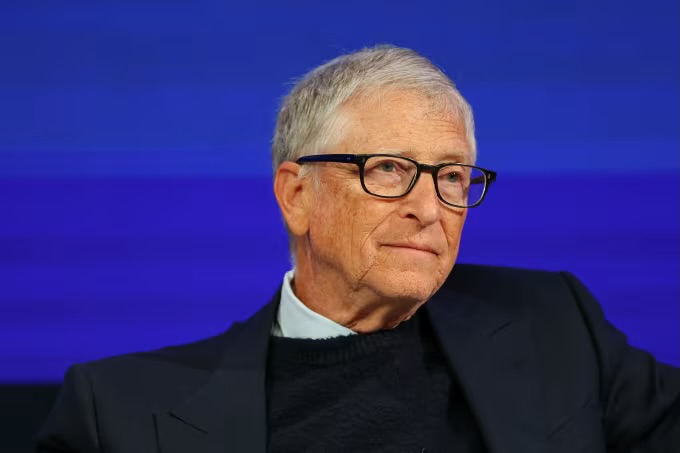
Bill Gates Warns AI Could Permanently Eliminate Millions of Jobs

Microsoft co-founder, Bill Gates, has warned that the world’s transition into the artificial intelligence era could rank among the most disruptive periods in human history.

He said governments were failing to do enough to prepare for the widespread job losses and social and economic disruptions that could result from the rapid advancement of AI.

Gates made the remarks in a more than 6,000-word essay titled “The turbulent AI era is here. The choices we make now are critical,” published on his Gates Notes website on Wednesday.

According to him, AI could either help narrow global inequality or widen the gap between the wealthy and the poor, depending on how governments, businesses and societies manage its rapid growth.

“In terms of equity, AI will either be the greatest equalizer ever invented, or the worst source of injustice.

“The challenge is monumental. Even under the best circumstances, the transition to this new AI era will be one of the most turbulent times in human history,” he wrote.

Gates argued that the world was already lagging in preparing for the changes AI could bring, saying governments, experts and communities had not fully addressed the scale of the potential disruption.

“Unfortunately, right now we are not preparing for it. I don’t see evidence that leaders, experts, and communities are confronting the challenges adequately. There is no plan to ease the entry into the AI era,” he stated.

He said the rapid deployment of AI sets it apart from previous technological breakthroughs, which took considerably longer to transform workplaces.

“When the PC came along, it took 20 years to significantly change how we worked because the software had to be developed, the price had to come down, and people had to learn how to use the tools and incorporate them into their business processes.

“AI, on the other hand, runs on the devices we already have, and it uses natural language. We don’t have to adapt to it because it can adapt to us. It can watch the same training video that is used to train human workers and learn from existing data,” he hinted.

Gates listed widespread job losses among the three major threats posed by the AI transition, warning that the disruption could result in permanent changes to the labour market.

“Many jobs will disappear forever,” he wrote.

He said entry-level and mid-level workers could face the greatest risks, while many of the new roles created by AI may demand specialised skills that could take years to develop.

“AI may not reach this level, but its impact will not go away with an economic cycle. The jobs at most risk are entry- and mid-level, and the new jobs being created will mostly require skills that take many years to learn.”

Gates added that the effects of AI would not be limited to conventional technology and office-based jobs.

He further cautioned that blue-collar workers could eventually face similar disruption as advances in robotics accelerate, adding that he was especially concerned about young people preparing to enter the labour market.

According to Gates, the scale of the disruption could compel societies to rethink the traditional link between employment, income and economic security.

NFF President Gusau, Board Members Resign

The President of the Nigeria Football Federation, Ibrahim Gusau, and other members of the NFF board have resigned from their positions.

The resignations come amid mounting criticism over the administration and management of Nigerian football under the current leadership.

The pressure intensified following the Super Falcons’ failure to qualify for the FIFA Women’s World Cup, marking the first time the team has missed the tournament.

The NFF leadership had also reportedly come under scrutiny from security agencies over the management and utilisation of funds released by the Federal Government for the national football teams.

The Department of State Services was said to have joined other security agencies in investigating the federation’s handling of the N17 billion intervention fund approved by President Bola Tinubu in 2024.

The funds were released to settle outstanding wages, bonuses and other financial obligations owed to players representing Nigeria’s national teams.

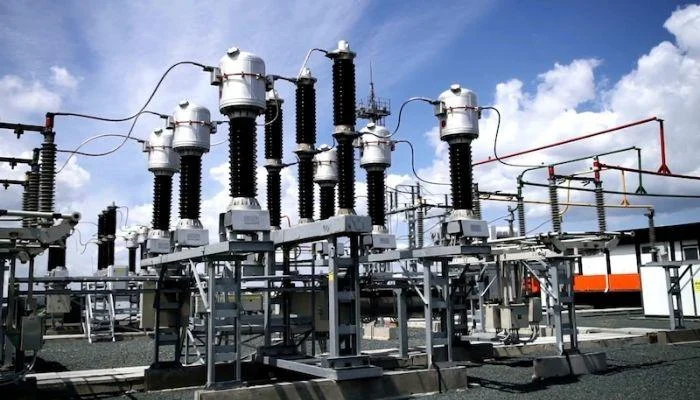
FG Targets 8,000MW Power Generation, Transmission by 2027

The Federal Government says it is aiming to achieve 8,000 megawatts of electricity generation and transmission by the end of 2027 as part of measures to boost power supply nationwide.

The Minister of Power, Joseph Tegbe, disclosed this on Wednesday in Abuja during the launch of the Renewable Energy Assets Management Company by the Rural Electrification Agency.

Tegbe said the government was targeting 6,500MW by the end of 2026, acknowledging that the country currently faces challenges in wheeling about 5,000MW of available electricity.

He expressed optimism that Nigerians would soon have access to round-the-clock electricity, describing the recent improvements in the power sector as the beginning of broader reforms aimed at transforming electricity supply.

The minister lamented that Nigeria had endured an embarrassing situation of inadequate electricity despite possessing significant power resources and infrastructure.

According to him, the newly established RAMCO is expected to adopt a new model for managing and sustaining renewable energy assets, with its mandate eventually expanding to cover the wider electricity grid.

Tegbe added that the government was developing a more flexible electricity system that would integrate grid power, embedded generation, interconnected and distributed renewable energy, energy storage and other emerging technologies.